
Case Study I
Adaptive Reuse
This project explores the adaptive reuse of an existing riverside recreational site through the integration of a new community clubhouse and preserved heritage cabin. Inspired by the gathering-based lifestyle and ecological values of the Algonquin region, the proposal views the cabin as a cultural “seed” that carries memory, knowledge, and community identity across generations. Rather than dominating the landscape, the design focuses on strengthening relationships between architecture, nature, and people through sensitive site planning and environmental integration.
The design strategy was developed through careful analysis of circulation networks, environmental conditions, and existing landscape relationships to create a more connected and accessible community experience. By integrating adaptive reuse principles with contemporary architectural interventions, the proposal establishes a flexible and environmentally responsive destination that supports both social interaction and long-term cultural continuity.
Details
1 Floor
Heritage Cabin with Community Clubhouse
2026 / Deep River, Canada
Adaptive Reuse Building Design
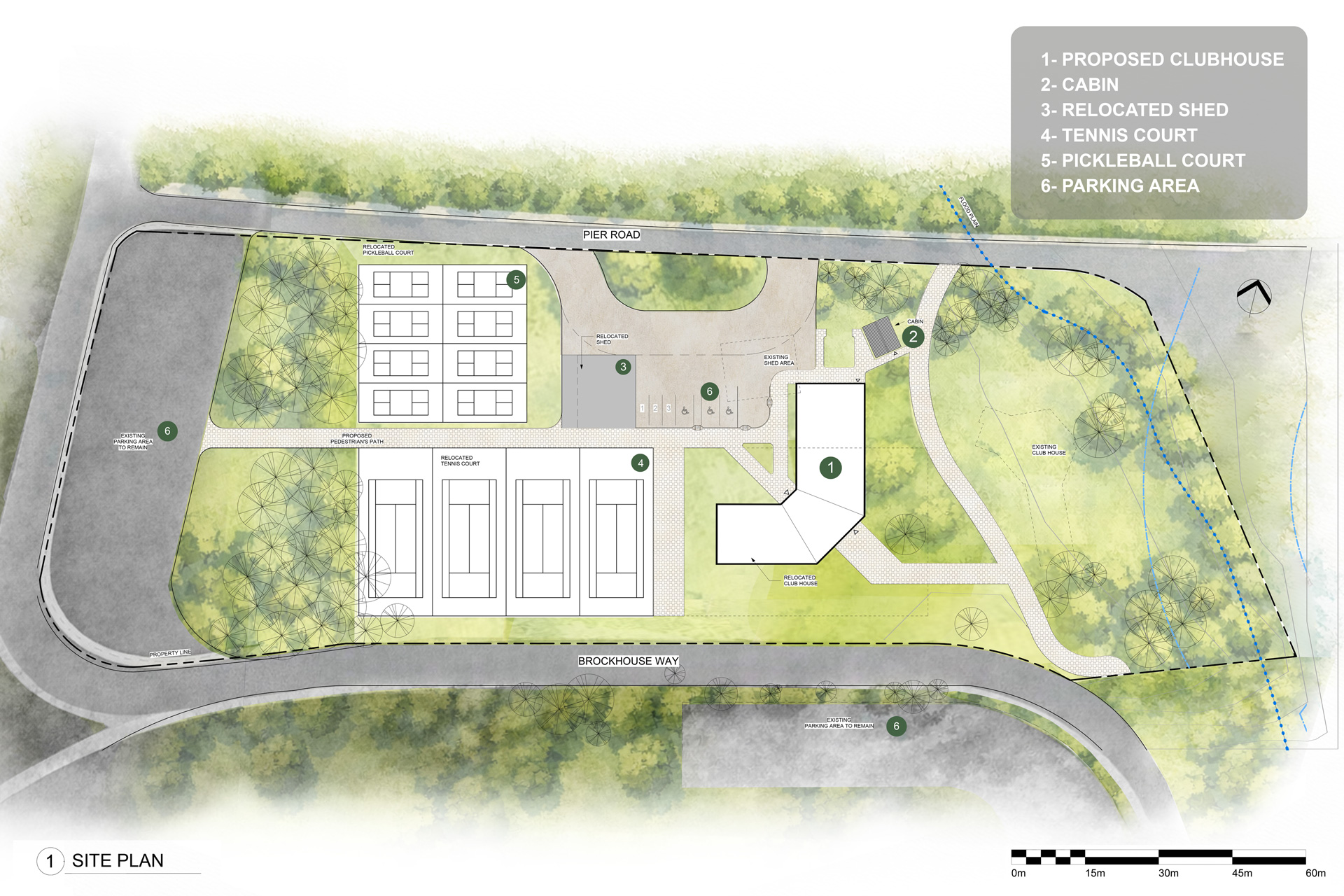
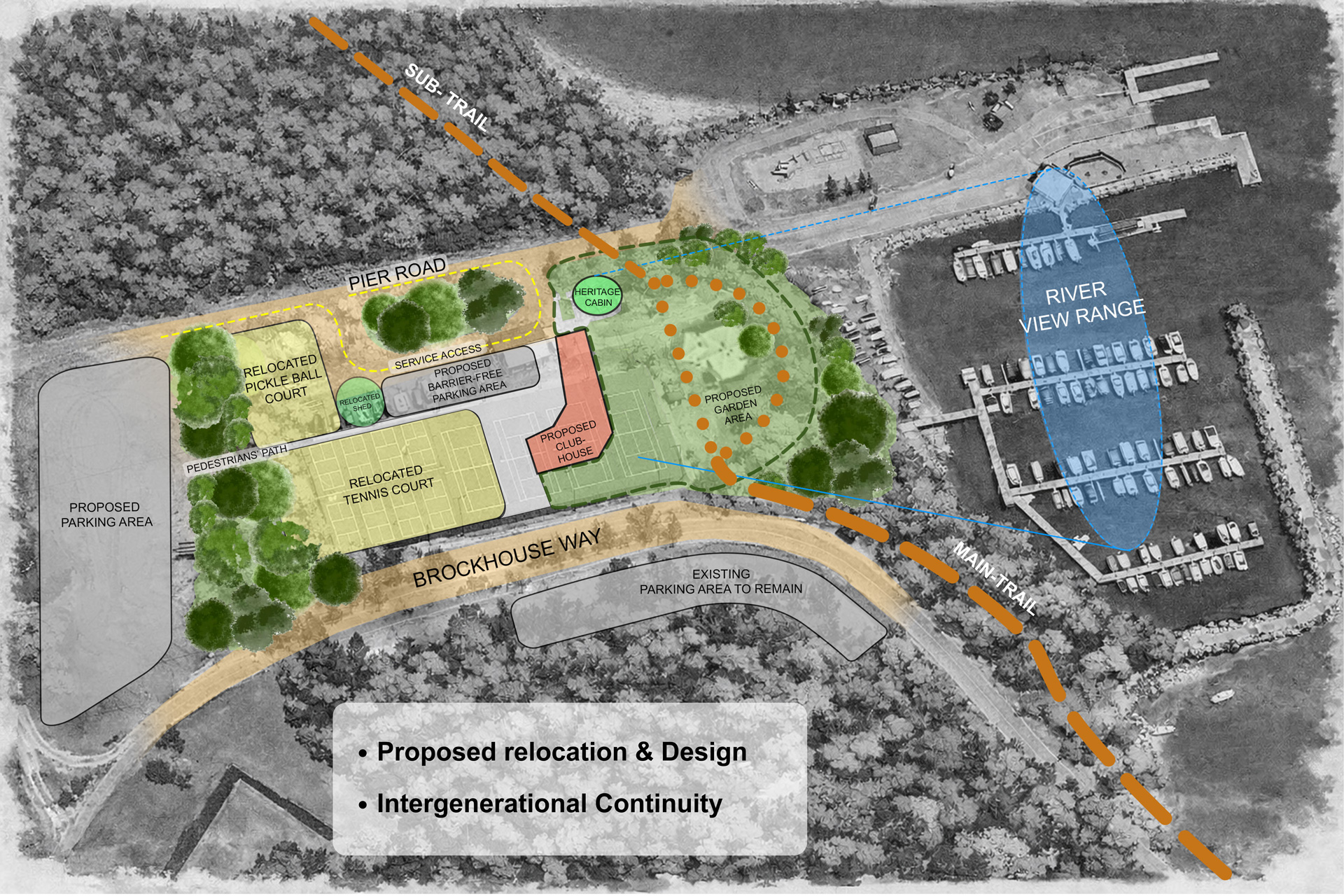
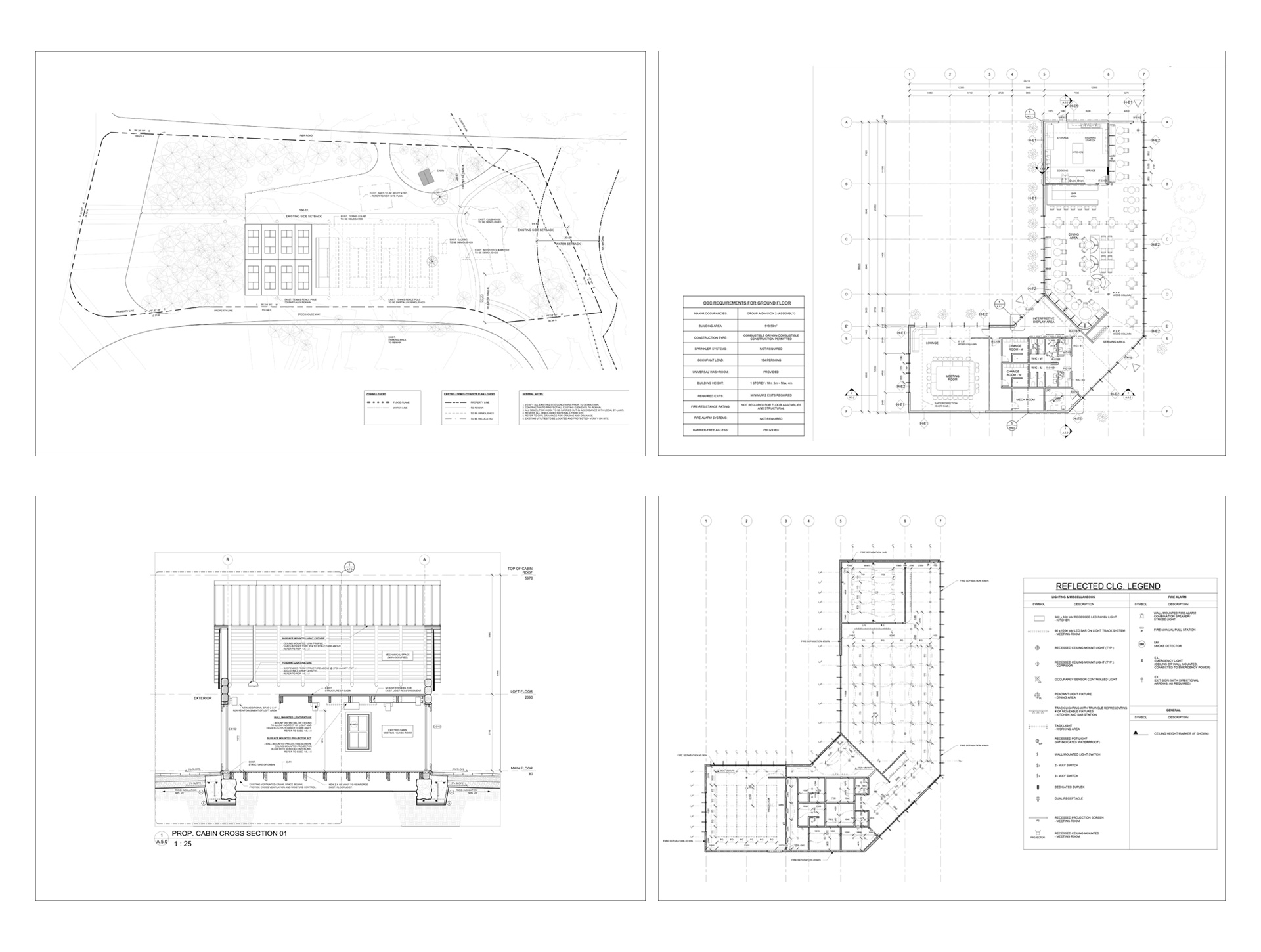
The site plan reorganizes the clubhouse, trails, and recreational amenities to reinforce the heritage cabin as the cultural centre of the site.
The clubhouse was relocated further inward to improve circulation flow, preserve river views, and create stronger visual connections to the cabin. Tennis and pickleball courts were consolidated into a unified activity zone, while transitional landscape spaces connect visitors naturally through the site.
Existing trail systems were integrated into the planning strategy to create accessible and fluid movement between gathering, recreation, and ecological learning areas.
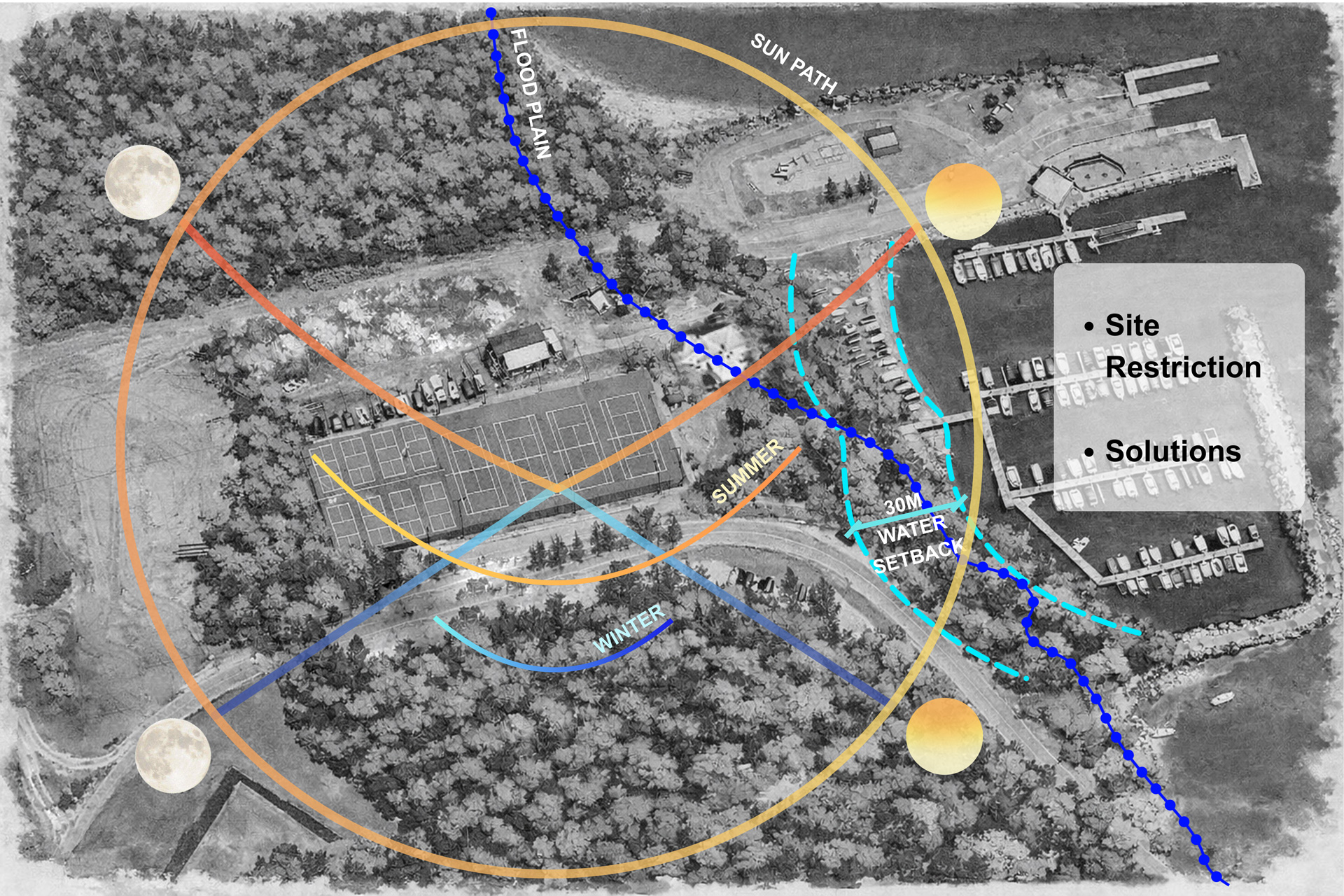
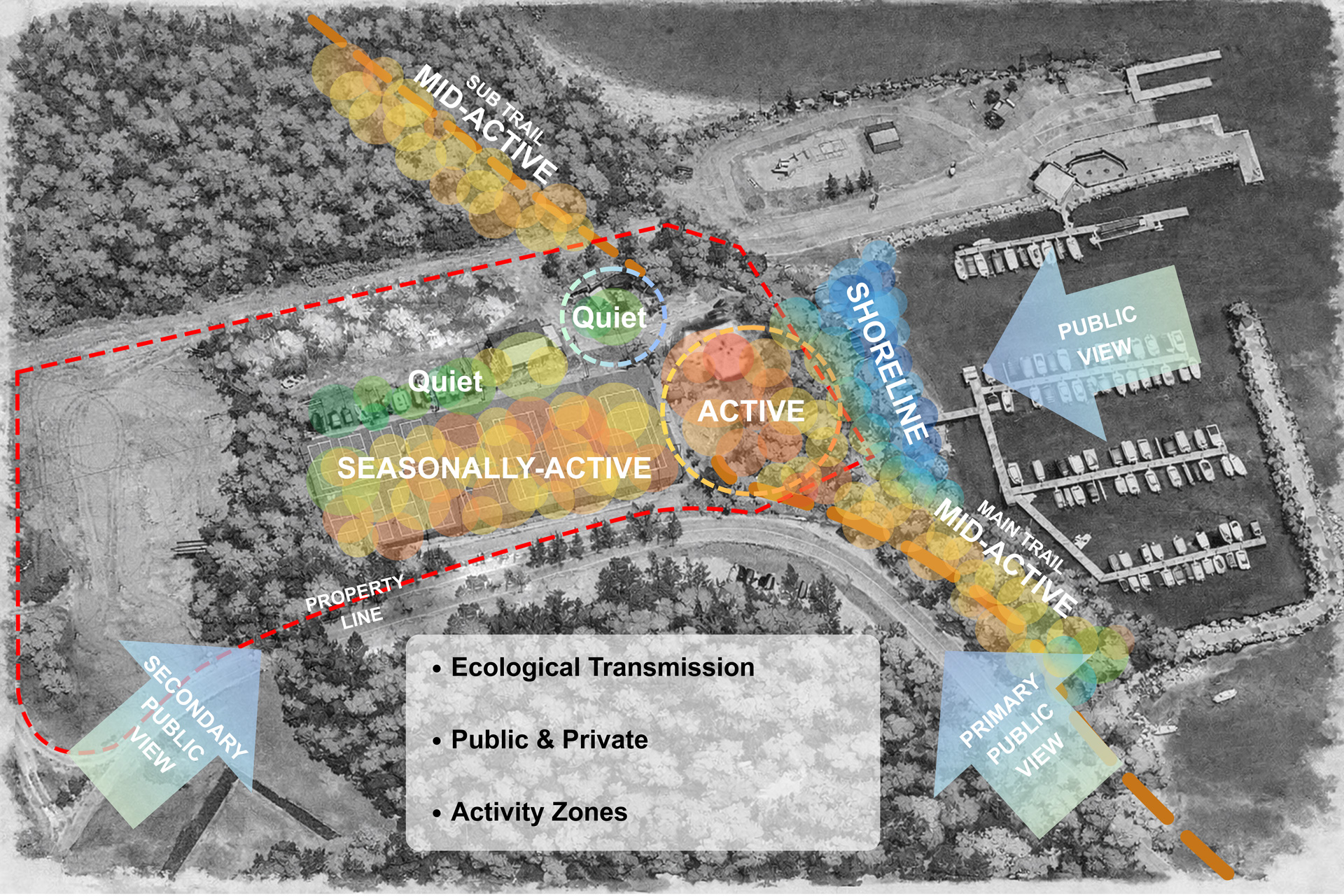
Site analysis focused on environmental conditions, circulation patterns, and the relationship between public activity and protected ecological space. Sun and flood studies informed the placement of the clubhouse to improve river views while avoiding vulnerable landscape areas.
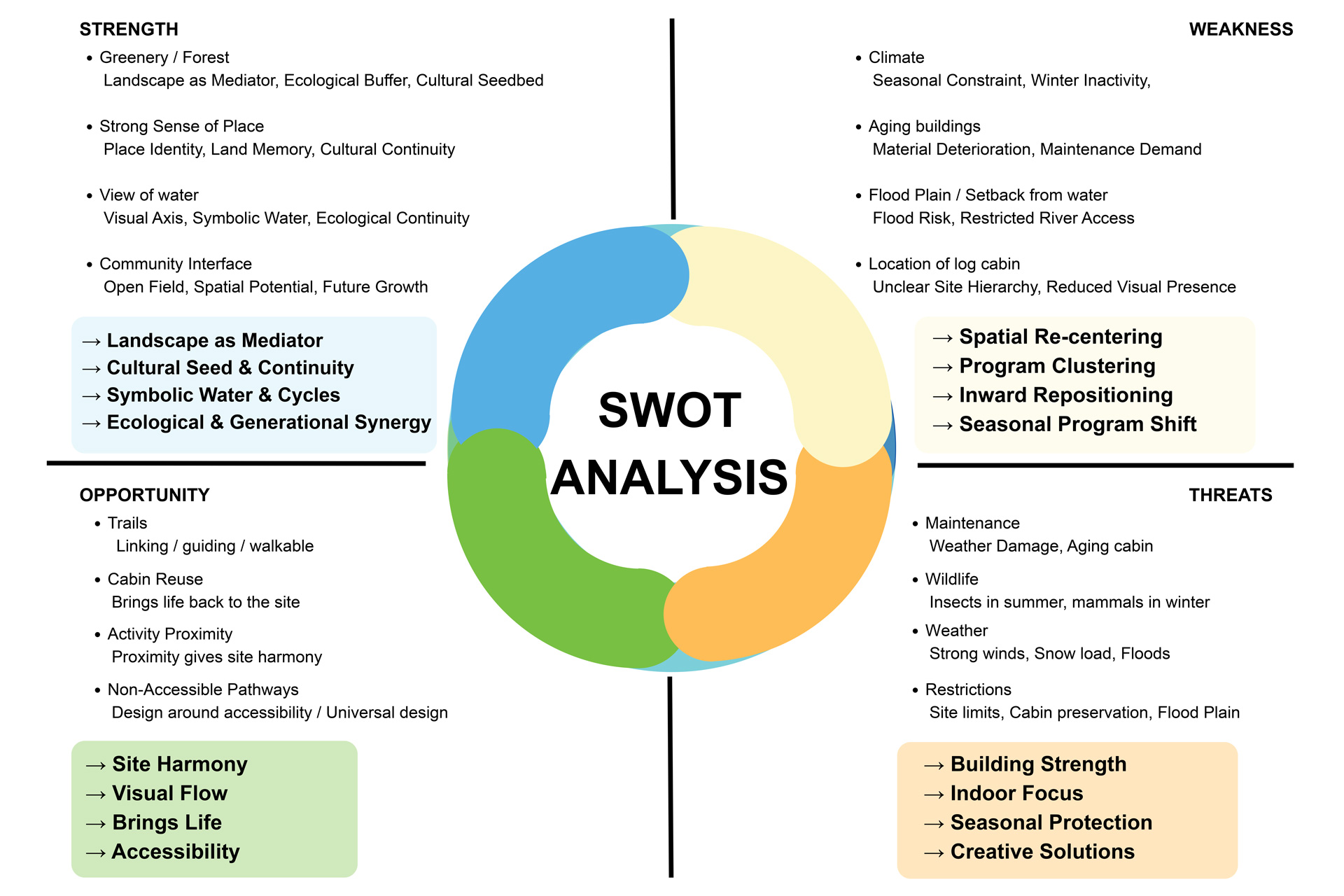
Existing trail systems revealed opportunities to strengthen visibility and circulation throughout the site, naturally guiding visitors toward the heritage cabin. SWOT analysis identified the riverfront landscape, mature greenery, and strong sense of place as key strengths, while climate exposure and fragmented circulation became opportunities for a more resilient and connected site strategy.
Public-to-private zoning studies also established a gradual transition from active gathering areas toward quieter ecological learning spaces around the cabin.
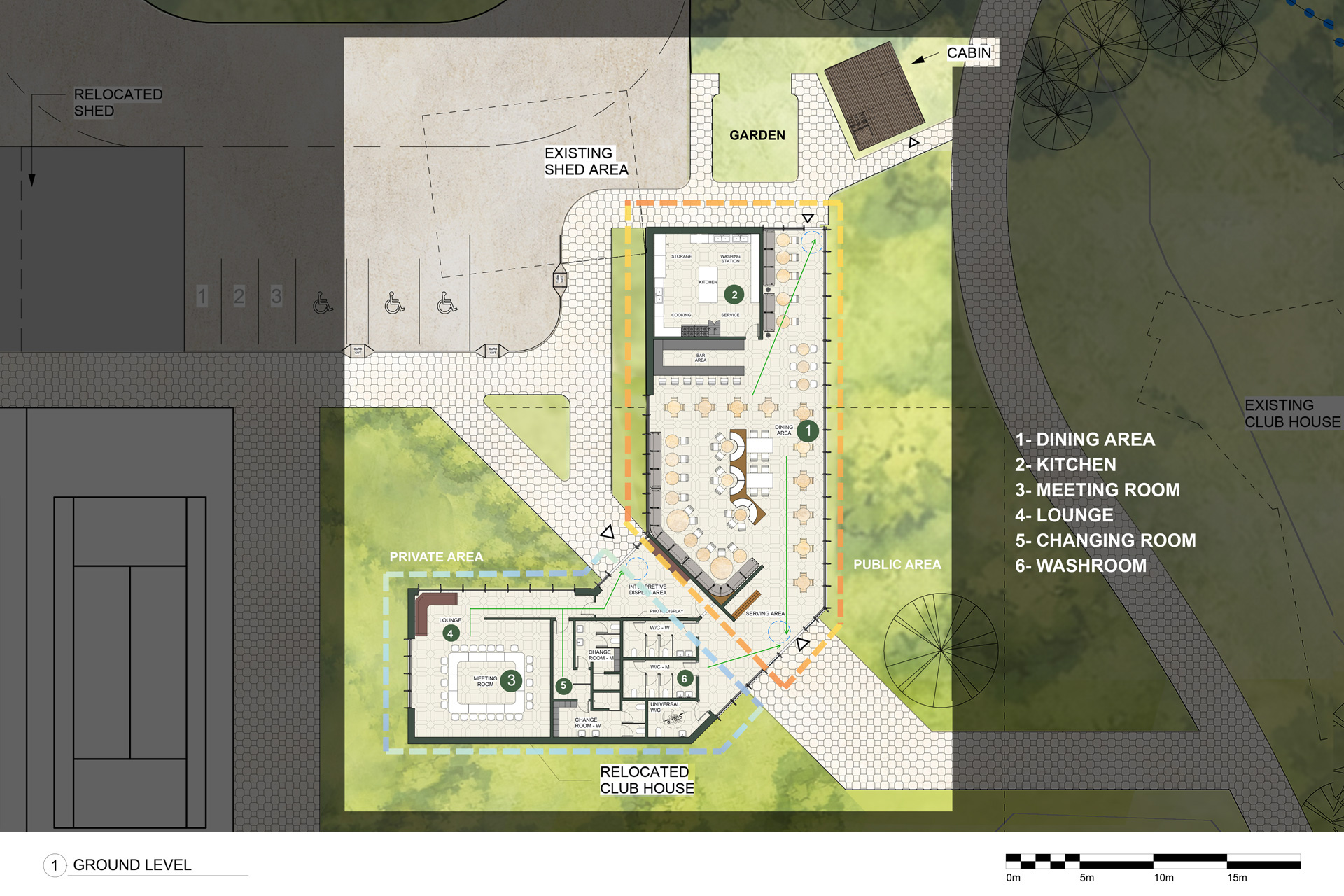
The floor plan establishes a clear hierarchy between public gathering spaces, community functions, and quieter transitional areas. Open circulation routes and transparent interior spaces strengthen the visual relationship between the clubhouse, surrounding landscape, and recreational amenities.
The ecological learning program within the cabin is connected to the restaurant kitchen and garden spaces through a network of permeable pathways and outdoor gathering areas. Barrier-free circulation and flexible community-oriented planning strategies were integrated throughout the design to support accessibility, usability, and long-term adaptability.
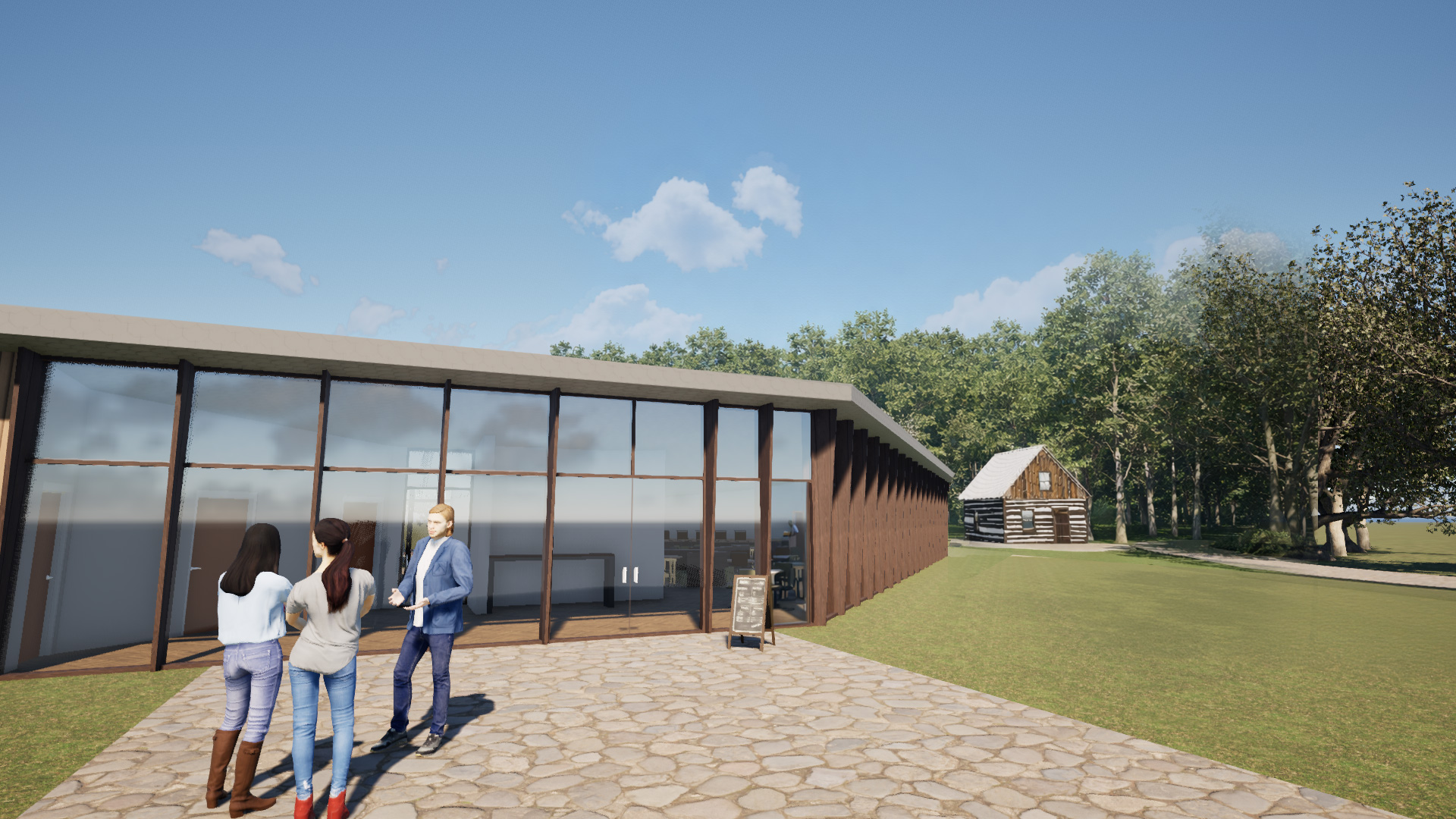
The fin-shaped mullion system was inspired by the architectural character of the original clubhouse to preserve a visual connection to the site’s history through a contemporary interpretation.
The vertical fin geometry also guides views from the new clubhouse toward the heritage cabin, strengthening its visual presence across the site. Compared to the previous site condition, the new design significantly improves cabin visibility while reinforcing the relationship between architecture, landscape, and cultural memory.
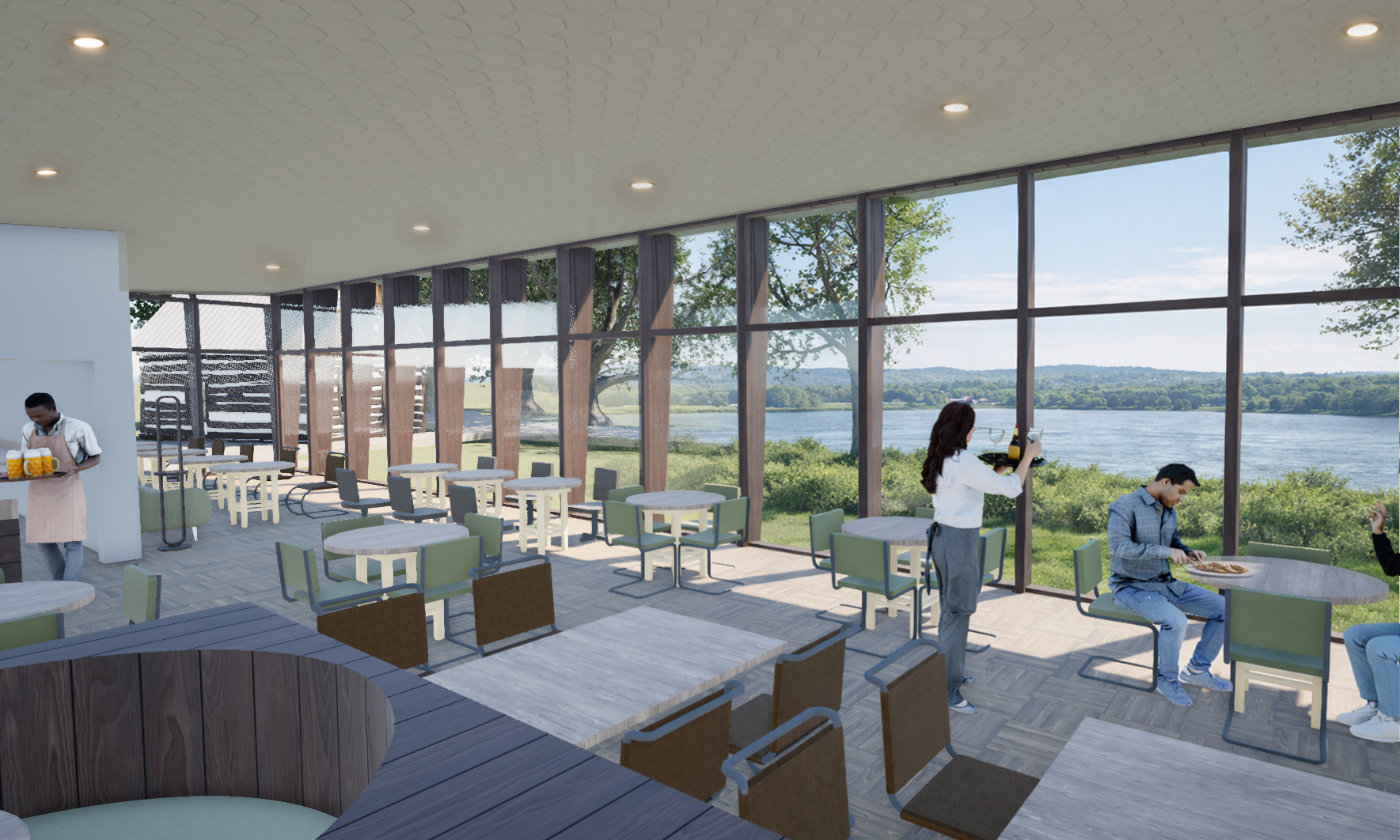
The restaurant space was designed to strengthen the relationship between the clubhouse, riverfront landscape, and heritage cabin through visual openness and environmental integration. Large curtain wall systems maximize natural daylight and seasonal river views while maintaining a continuous visual connection to the surrounding site.
Positioned further inward from the site edge, the building creates a softer transitional landscape zone where trail users can move naturally between gathering, recreation, and ecological spaces.
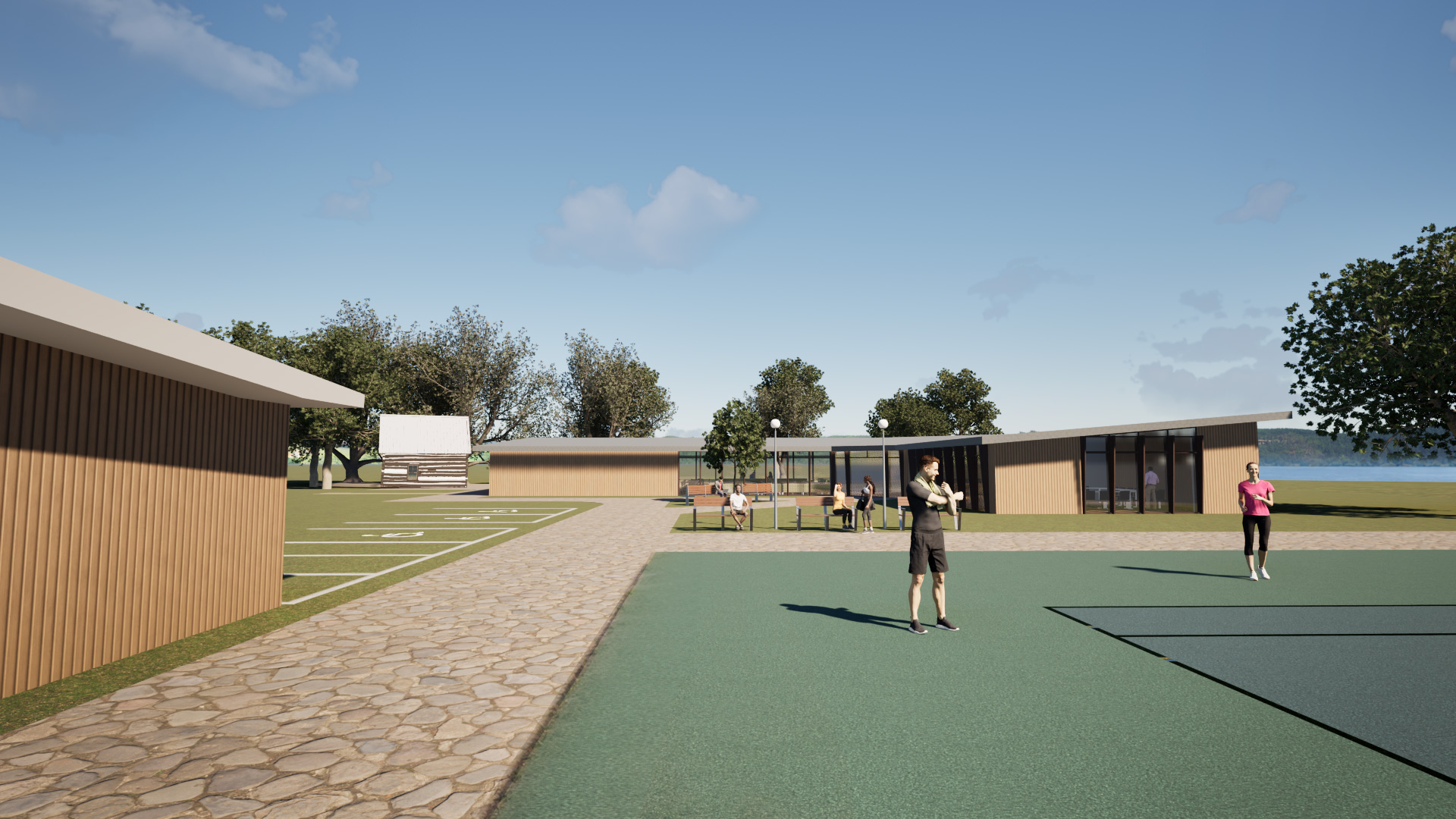
This perspective highlights the site’s circulation hierarchy and the strong visual relationship between recreational amenities, gathering spaces, and the clubhouse.
Rather than separating activities across isolated zones, the design clusters community functions together to encourage interaction and social connectivity. Open sightlines and integrated pathways create a more cohesive and community-oriented site experience from the west recreational edge.
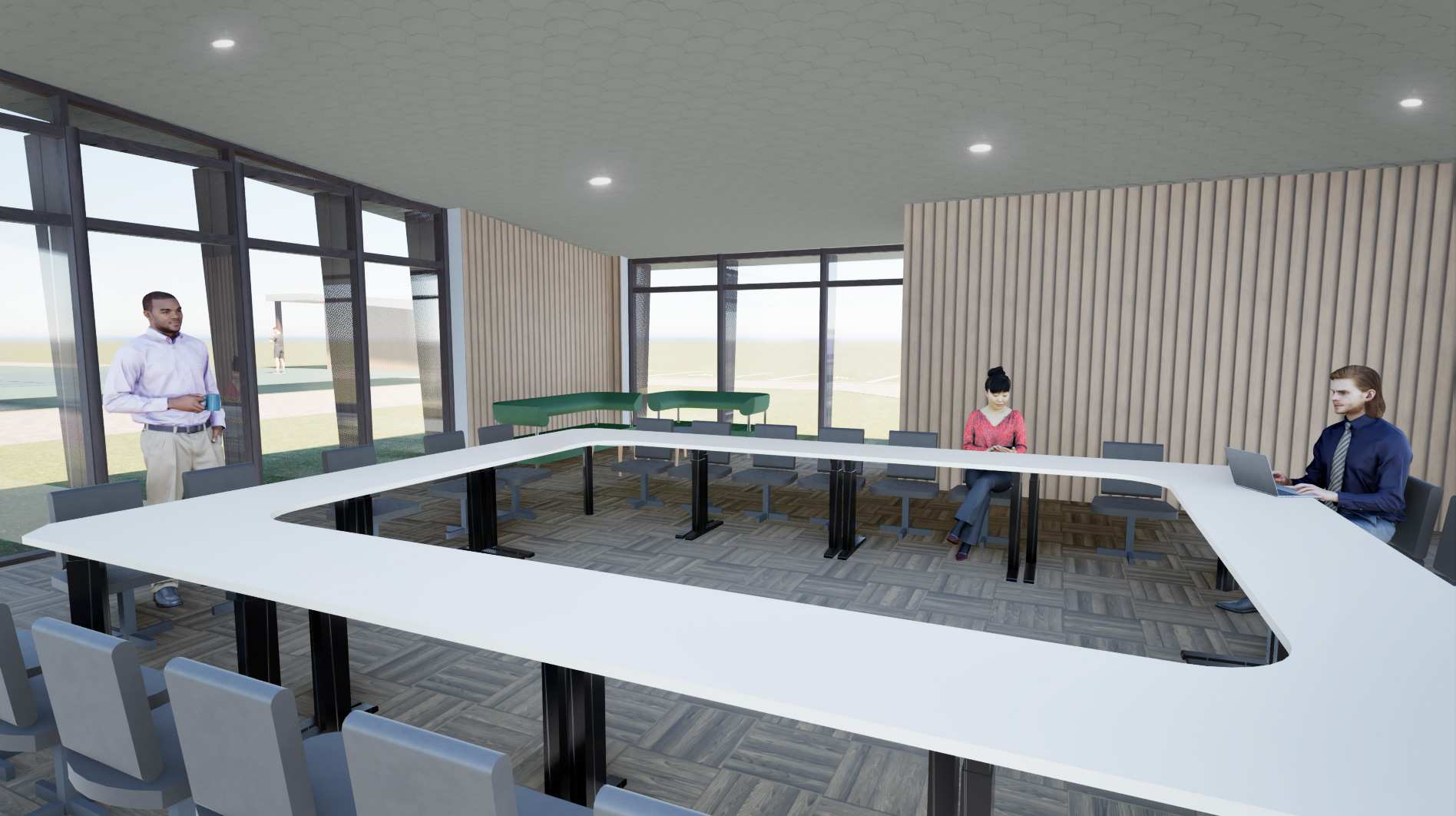
The meeting room was designed to provide a quieter and more focused interior environment while maintaining openness and visual connection to the surrounding recreational landscape.
Curtain wall systems reduce the sense of enclosure by maximizing daylight access and extending views toward the tennis courts and outdoor activity spaces. This visual relationship reinforces the project’s emphasis on community engagement by allowing interior gathering spaces to remain connected to exterior social activity.
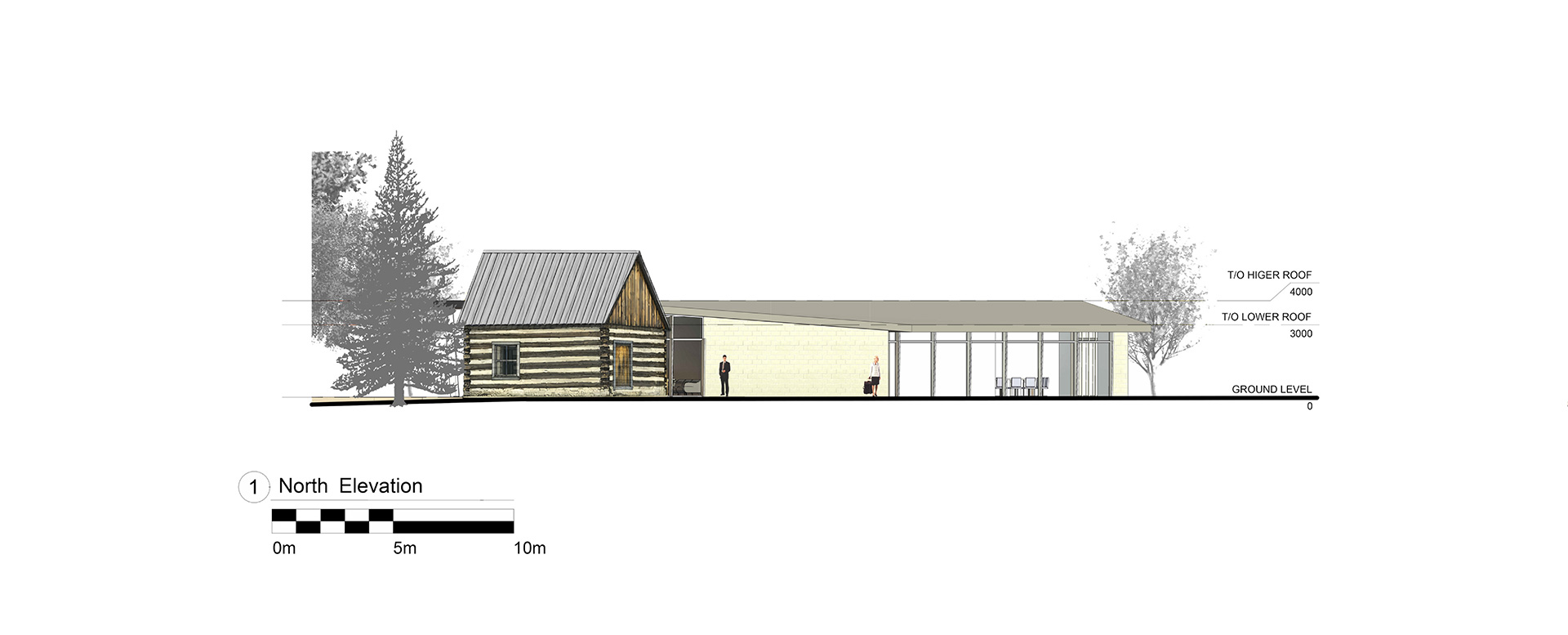
North Elevation
The north elevation was designed to maintain a respectful relationship with the adjacent heritage cabin while preserving visual openness across the site.
The clubhouse remains intentionally lower in height to avoid overpowering the historic structure and maintain the cabin’s visual prominence. Carefully positioned glazing allows indirect views toward the cabin from the restaurant interior. The elevation emphasizes transparency and contextual integration through restrained architectural expression.
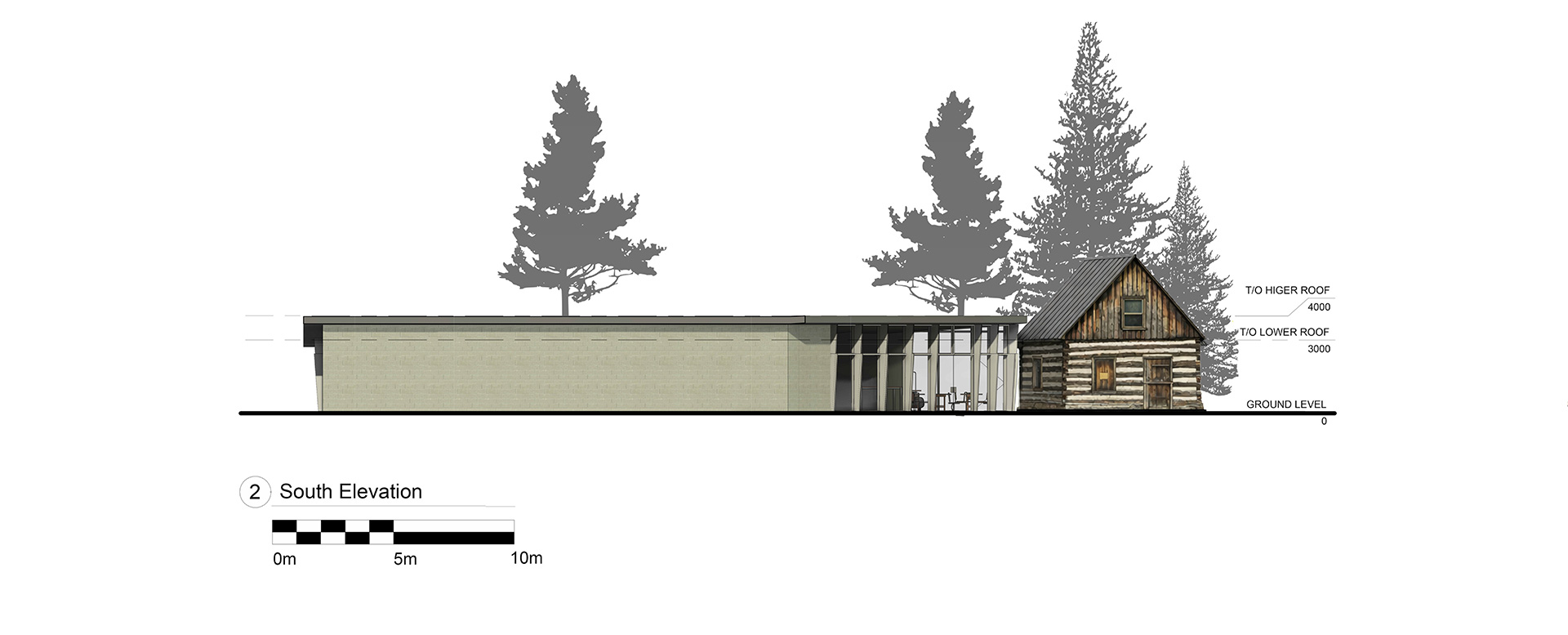
South Elevation
The south elevation strengthens the connection between the clubhouse, surrounding trails, and public gathering spaces. Open facade conditions and accessible circulation edges encourage fluid movement into the site from multiple directions.
Landscape transitions soften the boundary between architecture and the surrounding environment while reinforcing the project’s community-oriented character. The elevation acts as a welcoming threshold between the clubhouse and recreational landscape.
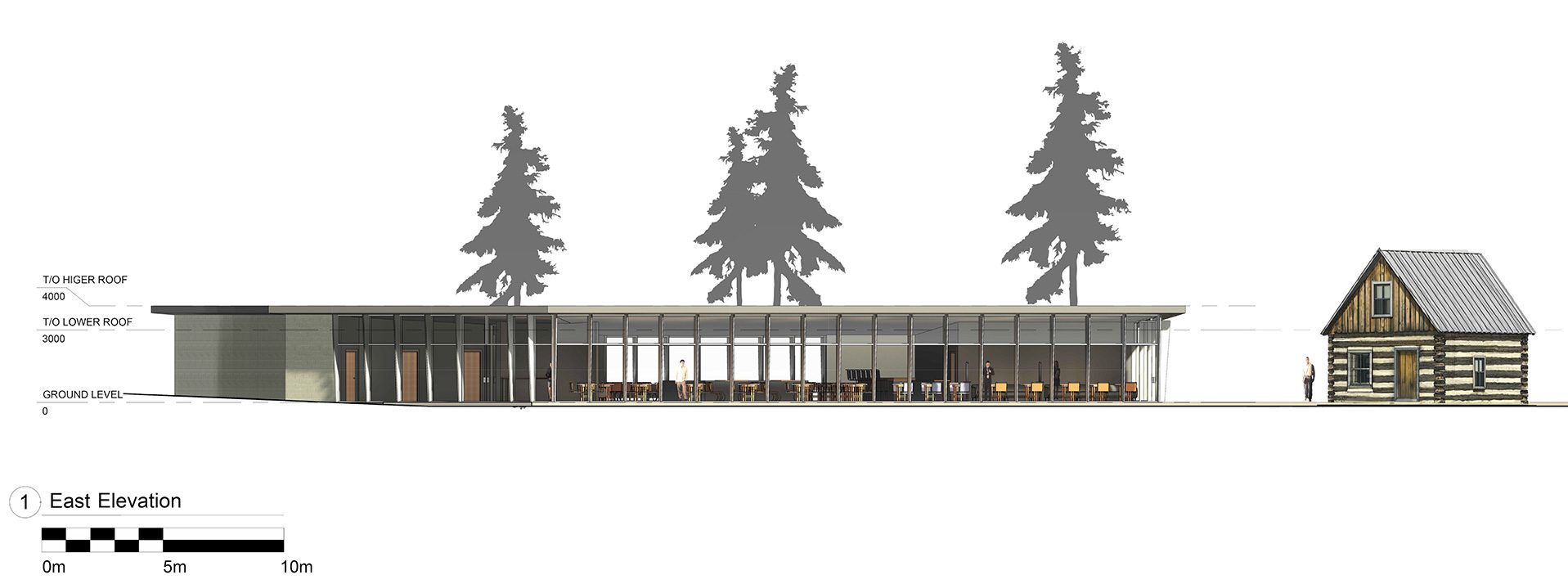
East Elevation
The east elevation was developed to maximize river views and seasonal observation opportunities throughout the year. Large curtain wall openings strengthen the relationship between interior gathering spaces and the surrounding natural landscape.
The facade also responds to the project’s land-based harvest study by framing environmental change as part of the architectural experience. Transparency and openness allow the river and surrounding ecology to remain the visual focus of the space.
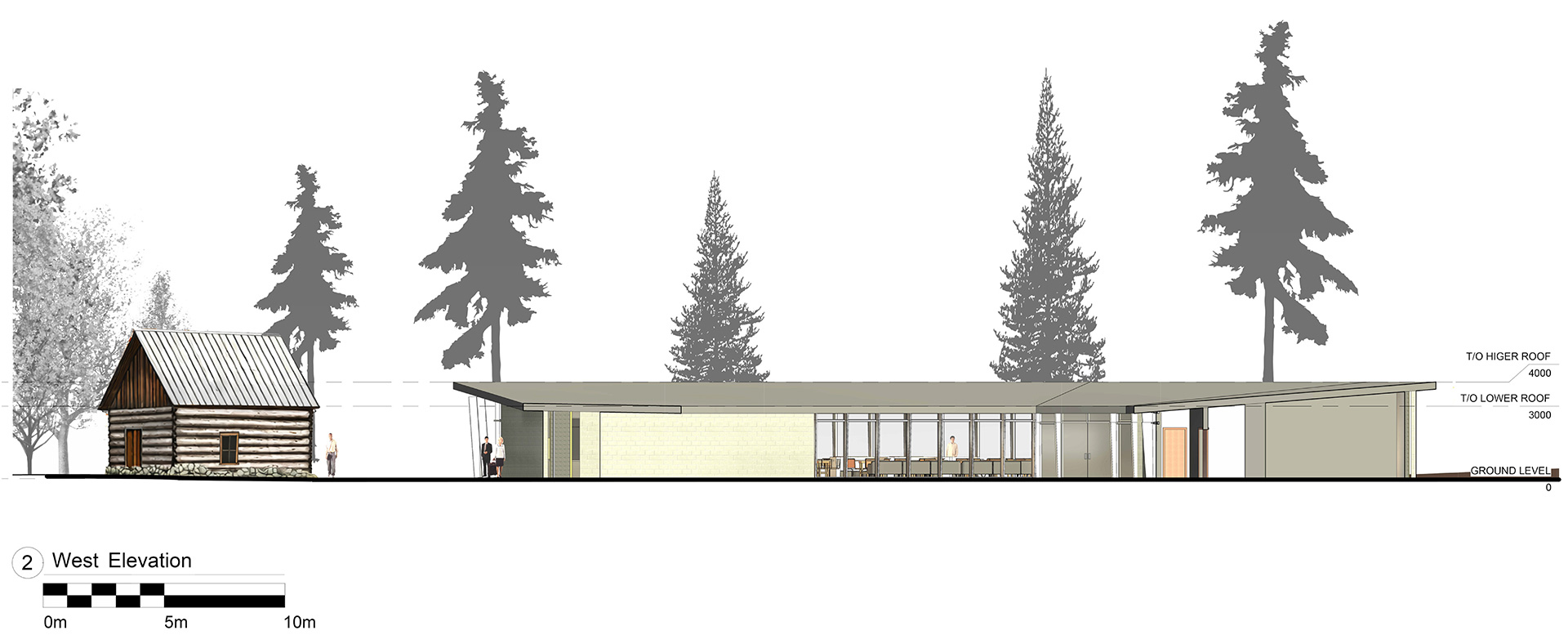
West Elevation
The west elevation connects the clubhouse directly to the tennis and pickleball activity zone, reinforcing the site’s active community character.
Transparent gathering spaces and open circulation paths encourage visual and physical interaction between recreation and social gathering areas. The elevation creates a fluid transition between indoor community functions and exterior recreational activities. Landscape integration strategies maintain openness while improving pedestrian connectivity across the site.
The elevation strategy was developed to preserve the visual relationship between the heritage cabin, surrounding landscape, and new clubhouse intervention while maintaining a cohesive architectural identity across the site. Building height hierarchy, transparency, and carefully framed openings were used to strengthen connections toward the river, trails, and recreational spaces without overpowering the existing environmental character.
Exterior facade conditions respond to seasonal environmental changes, circulation patterns, and varying activity levels across the site to create a balanced relationship between community gathering, recreation, and nature.
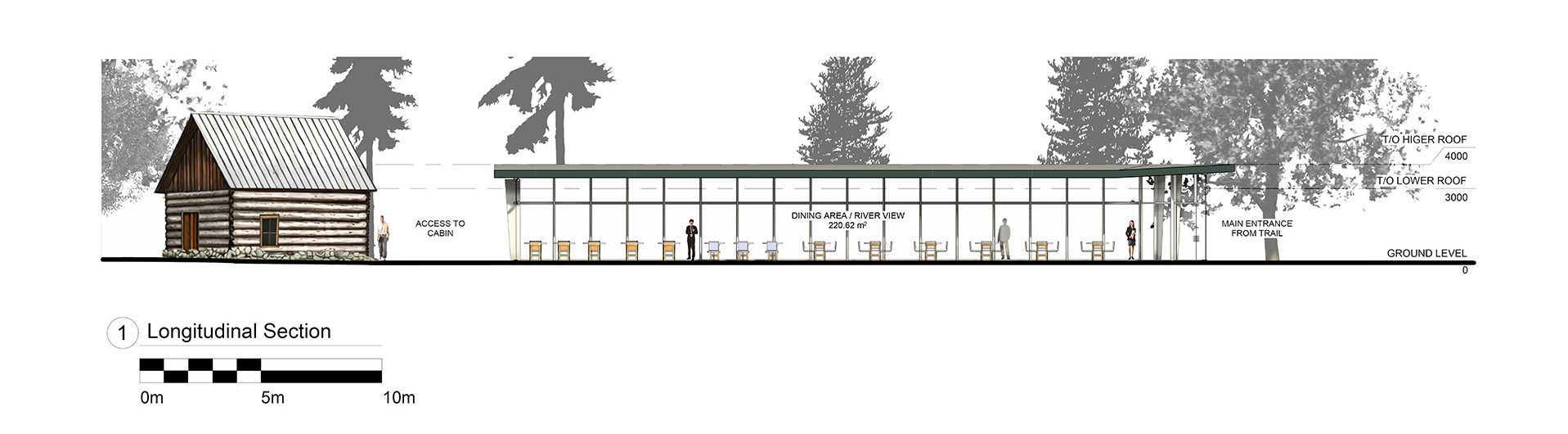
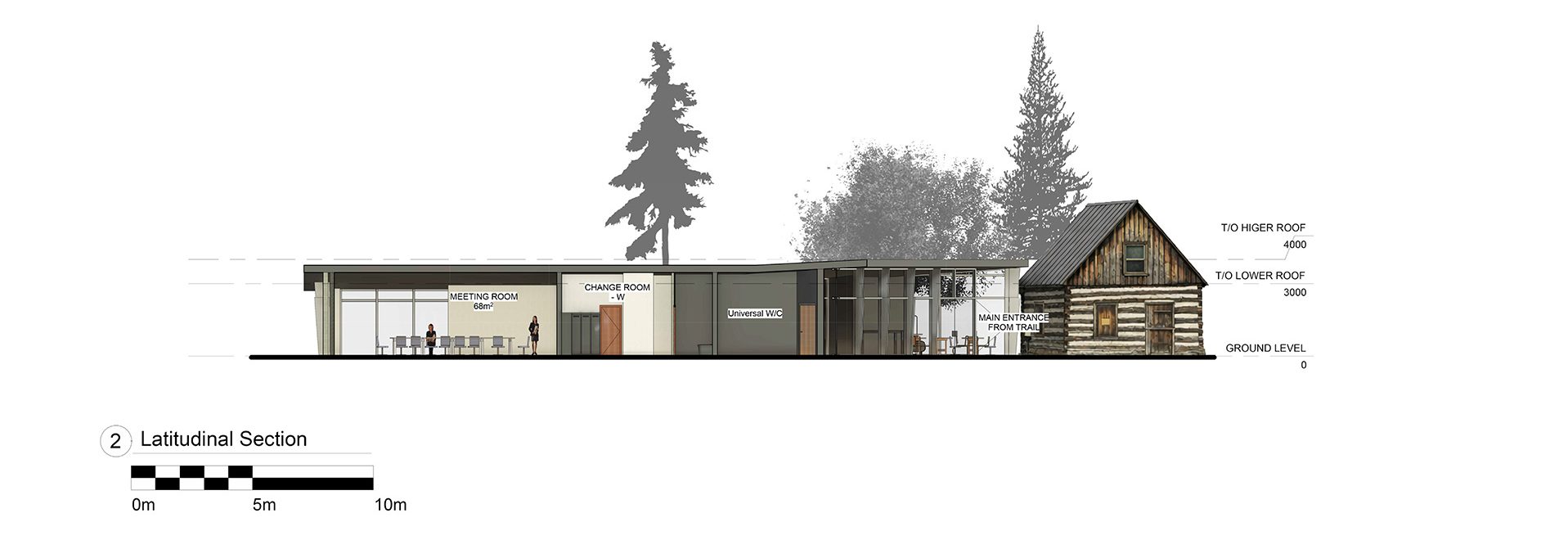
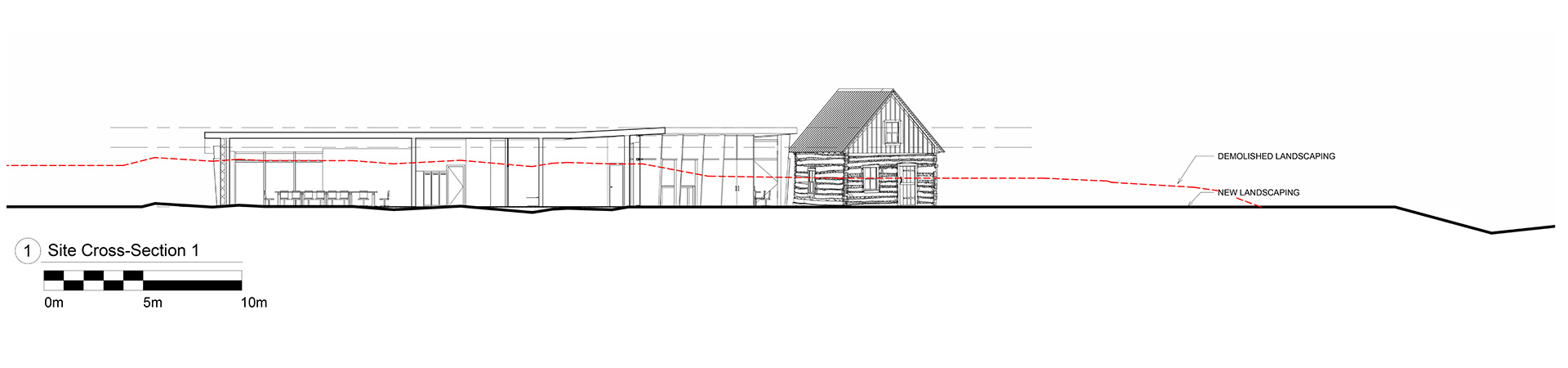
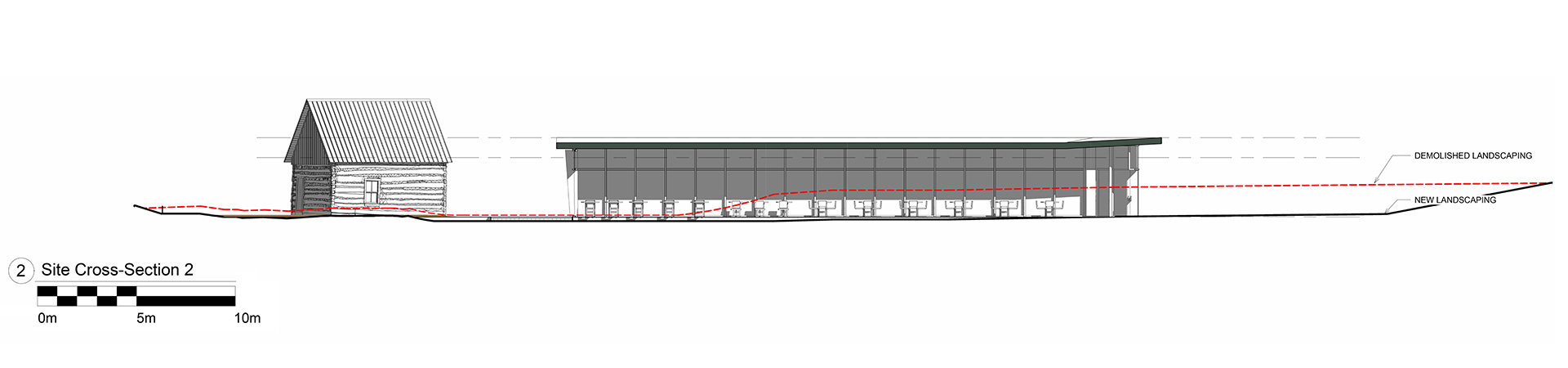
The sectional design focuses on strengthening the relationship between architecture, topography, and the surrounding riverside landscape to create a more immersive environmental experience. Interior and exterior spaces were layered to maintain visual continuity between gathering areas, circulation paths, and natural site conditions while maximizing openness and daylight access.
Changes in floor elevation, ceiling height, and transparency create gradual transitions between active communal zones and quieter reflective spaces. Carefully integrated architectural interventions minimize disruption to the existing environmental character while reinforcing the project’s adaptive reuse approach and connection to the landscape.
Selective demolition strategies removed fragmented hardscape and underutilized circulation areas to improve accessibility and reconnect movement across the site. Existing conditions were evaluated carefully to preserve important environmental and historical relationships between the clubhouse, heritage cabin, and surrounding recreational landscape.
Landscape reconstruction introduces softer transitional zones, ecological buffering, and more continuous pedestrian circulation between active and passive site areas. The redevelopment approach transforms disconnected site conditions into a more cohesive and environmentally responsive architectural and landscape framework.
Project Info
This academic project explores the adaptive reuse of an existing riverside recreational site through the integration of a new community clubhouse and preserved heritage cabin. Inspired by the gathering-based culture and ecological values of the Algonquin region, the proposal focuses on strengthening connections between community, landscape, and intergenerational learning.
The design emphasizes accessible circulation, riverfront engagement, and flexible gathering spaces while preserving the visual prominence of the heritage cabin and the environmental character of the site.
Academic Project
Completion: April, 2026
Project Type: Adaptive Reuse & Community Recreational Design
Architects: Jin Choi
Project Sustainability
- 65% Sustainable Materials
- 75% Energy Self-Sufficient
- 45% Less Construction Waste
Other Projects
Commercial
Lumen Davies
Toronto, Canada
Multi-used Commercial Development
commercial
Young Street Mall
Busan, Korea
Multi-Functional Shopping Centre
Interior
Cafe & Retail Interior
-The Gate Cafe, “Oasis in The City”
-The Gate Cafe, “Journey in The City”
-Miig, Urban Active-wear Retail Shop