
Case Study III
The Grove Residence
The Grove Residence is a student housing project designed for George Brown College’s Casa Loma Campus, with a strong emphasis on accessibility, code compliance, and long-term usability. The project was developed in close alignment with the Ontario Building Code (OBC), focusing on barrier-free design strategies to ensure inclusive and equitable living environments for all students.
Rather than prioritizing complex formal expression, the design process concentrated on zoning regulations, property line constraints, fire and life safety requirements, and efficient circulation systems. By integrating these regulatory frameworks with nature-driven design principles, such as natural light, ventilation, and landscape integration, the project seeks to balance technical rigour with student well-being. The Grove Residence proposes a practical yet humane approach to student housing, where regulatory precision and quality of life are treated as complementary design objectives.
Details
4 Floors
Student Residence Building
2025 / Toronto, Canada
Barrier-free Building Design
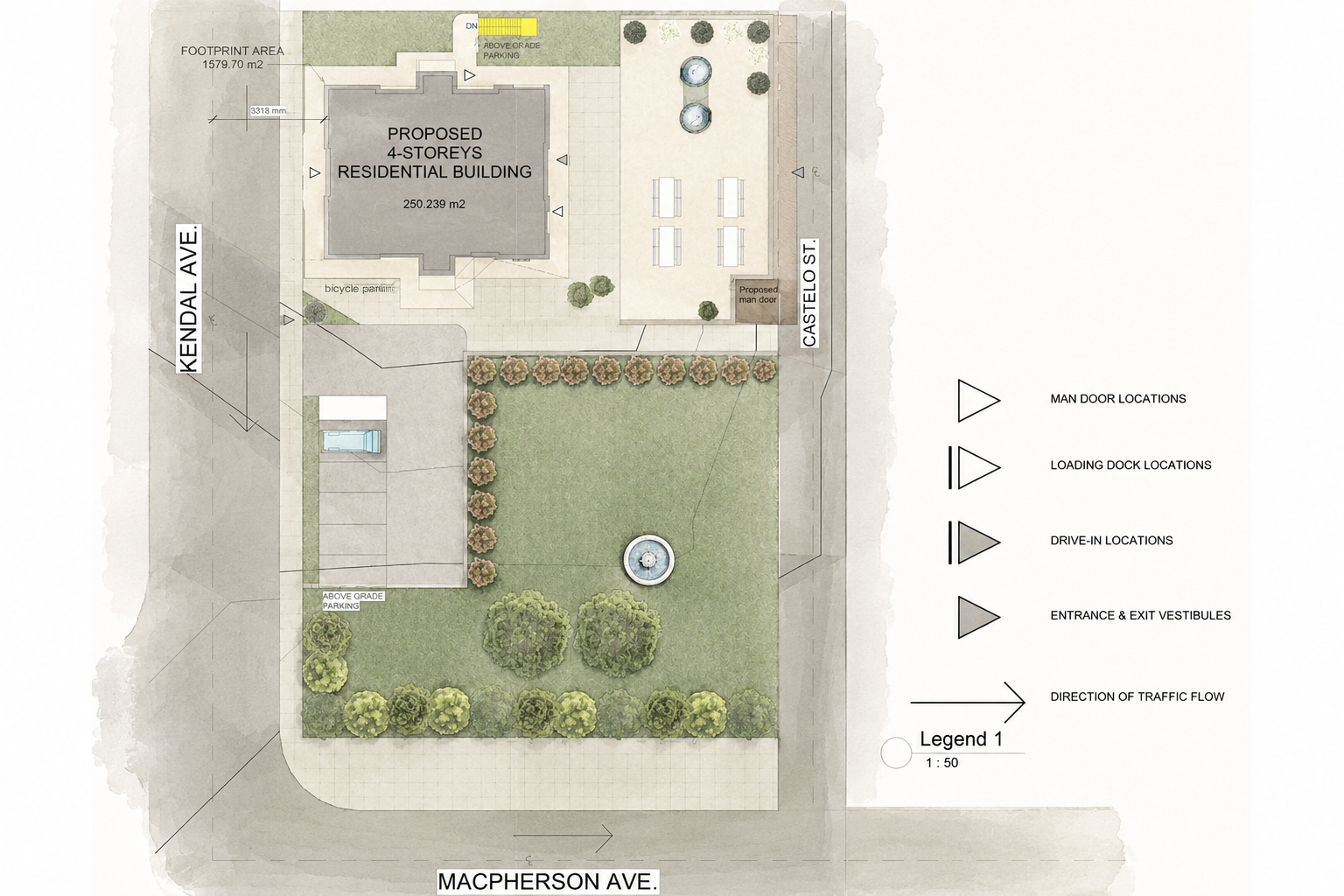
The site plan was designed based on zoning regulations and property line constraints, ensuring full compliance while maximizing functional outdoor space. Barrier-free pedestrian circulation was prioritized across the site, creating continuous and intuitive movement routes for all users. Landscape elements were used to soften the built environment and provide moments of rest and gathering.
These strategies allow the site to function as both circulation infrastructure and shared outdoor living space. In addition, planting and open spaces were arranged to visually connect the residence with the surrounding campus and park context, reinforcing the identity of the site as part of a larger green network.
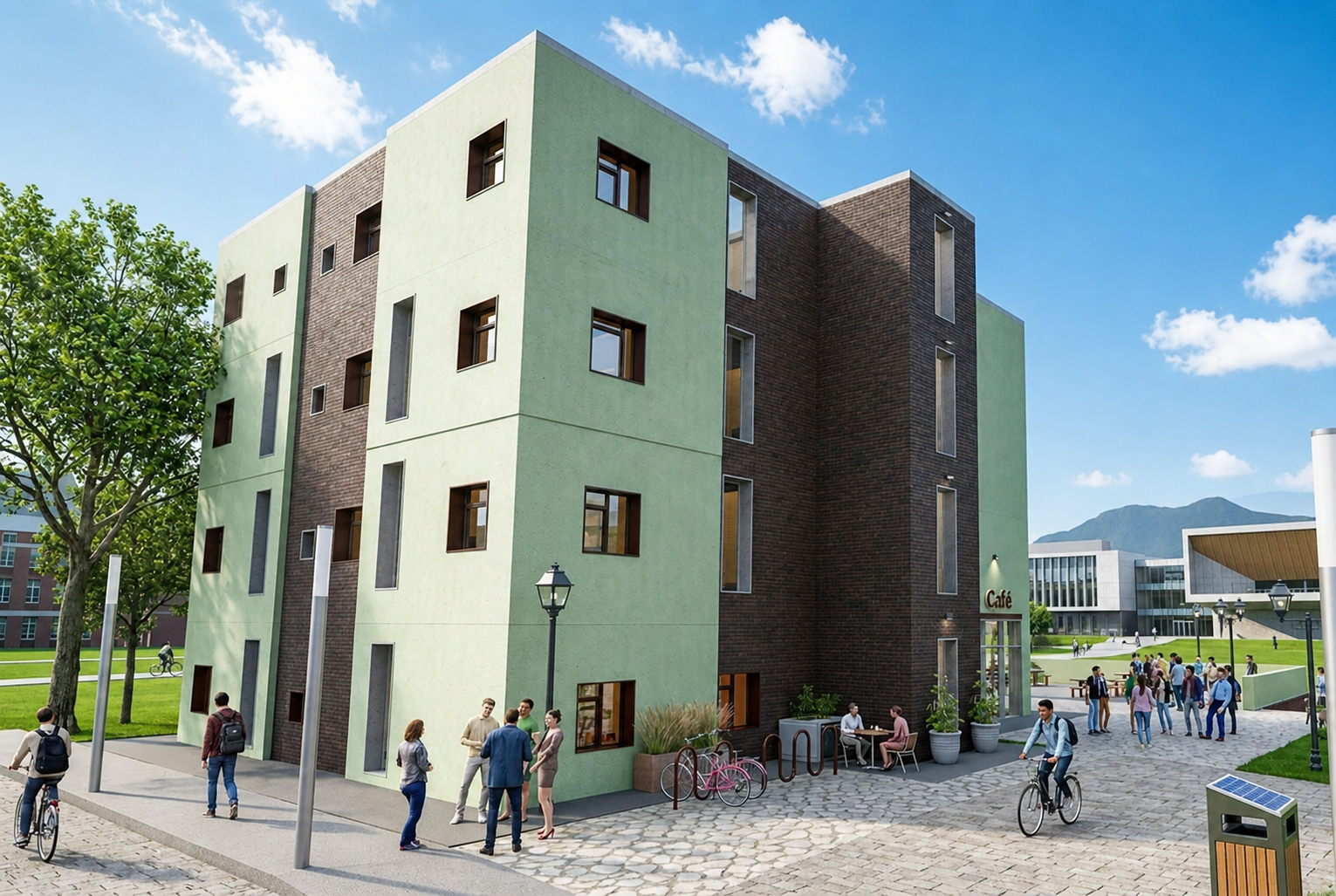
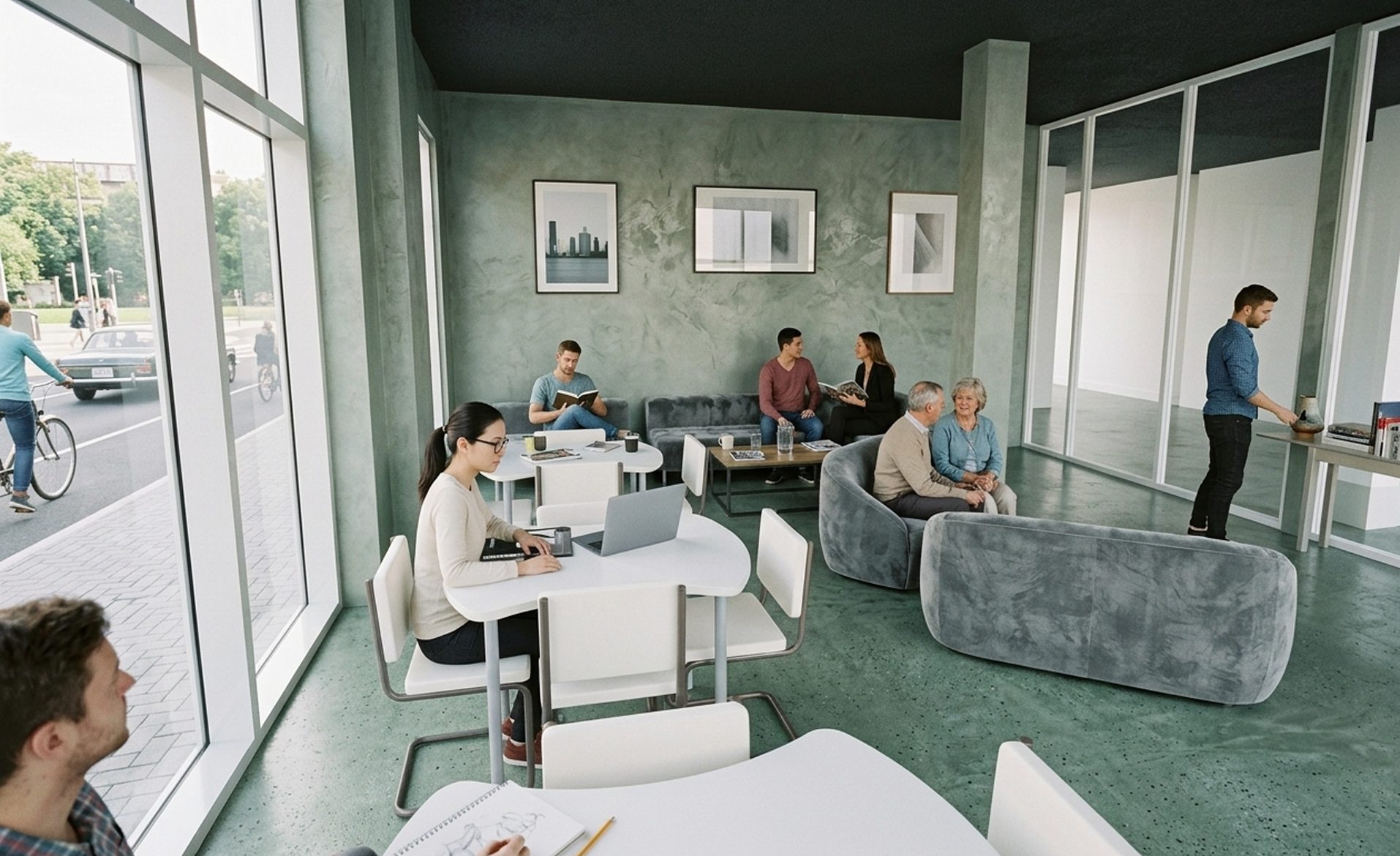
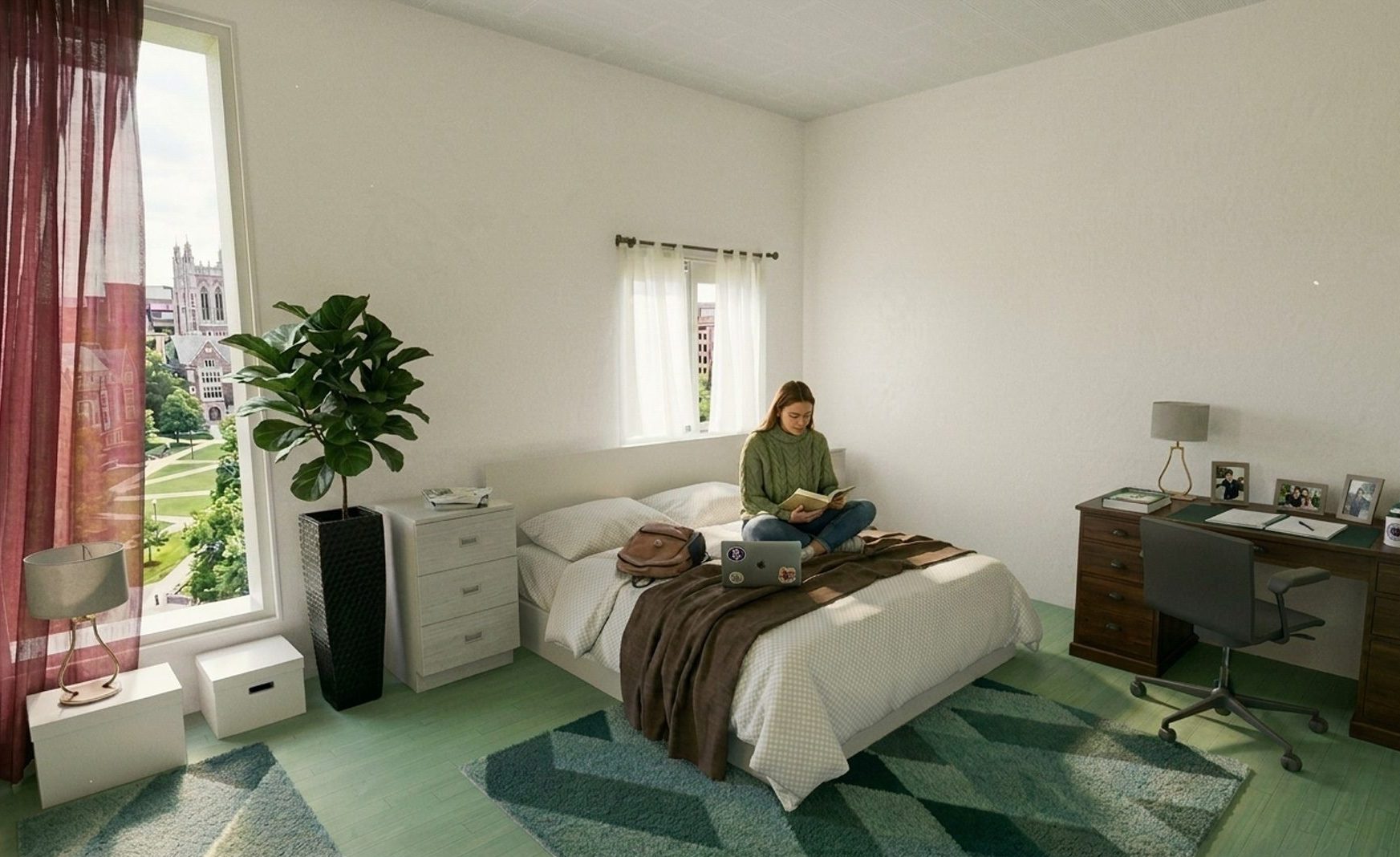
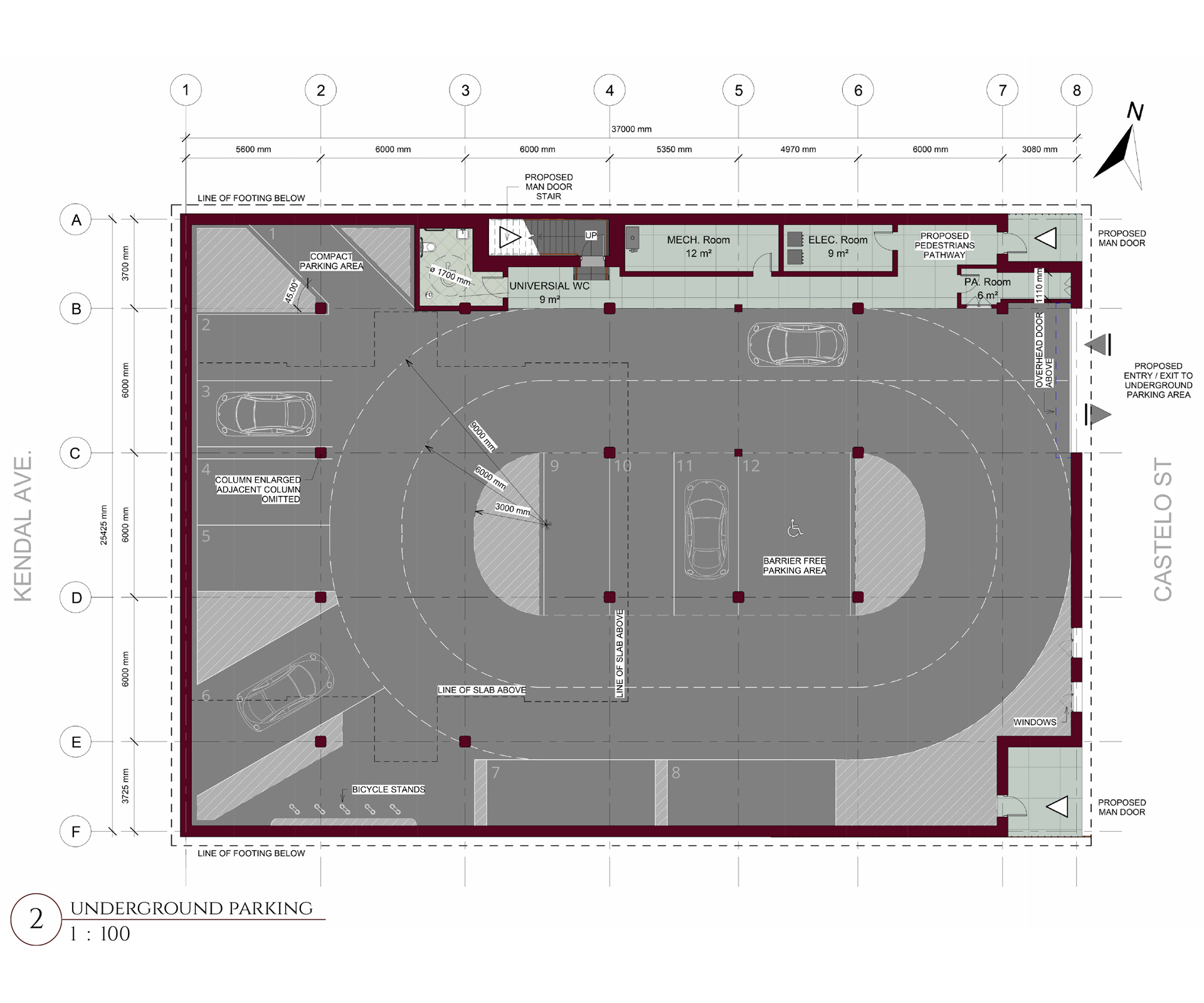
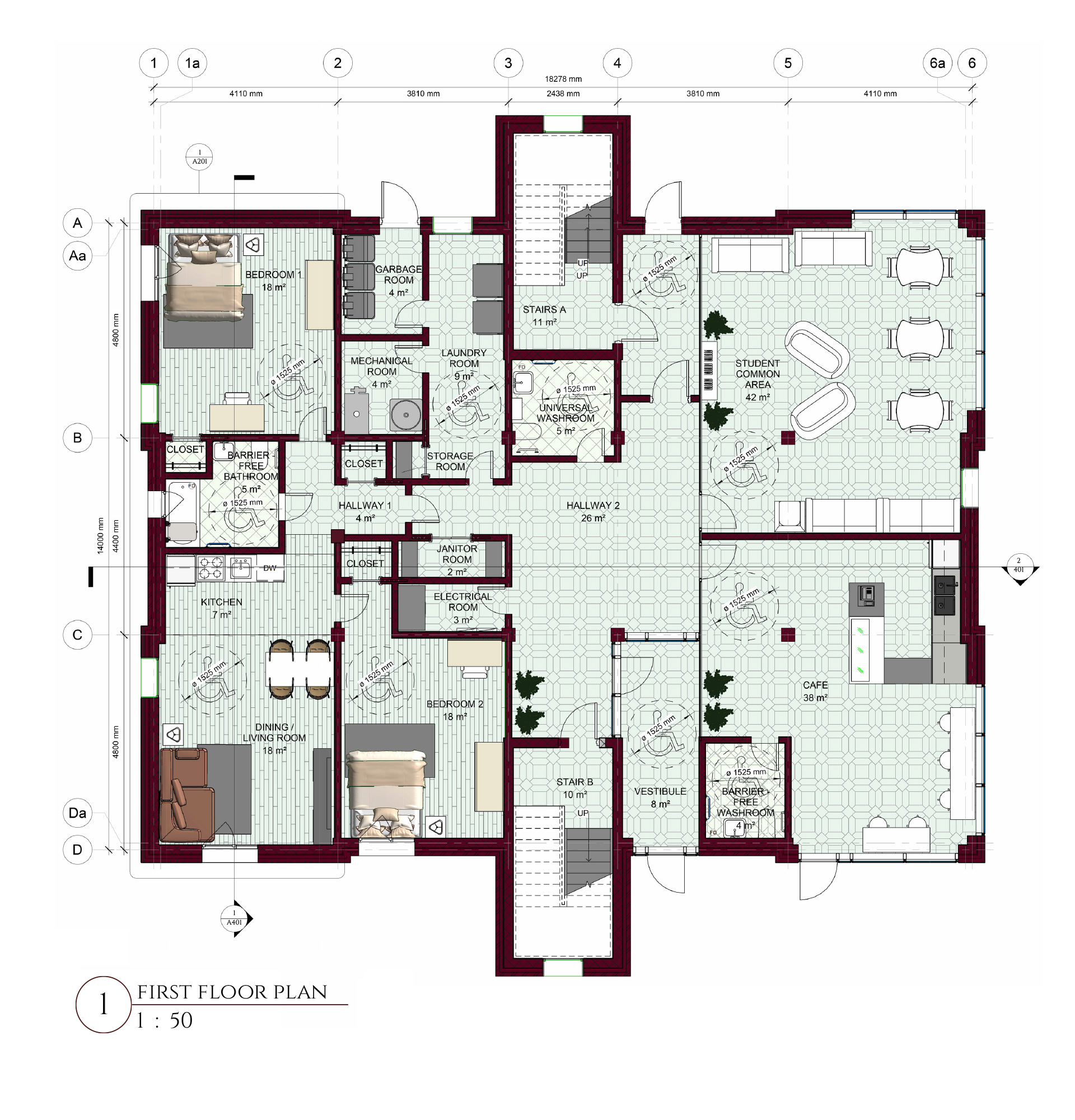
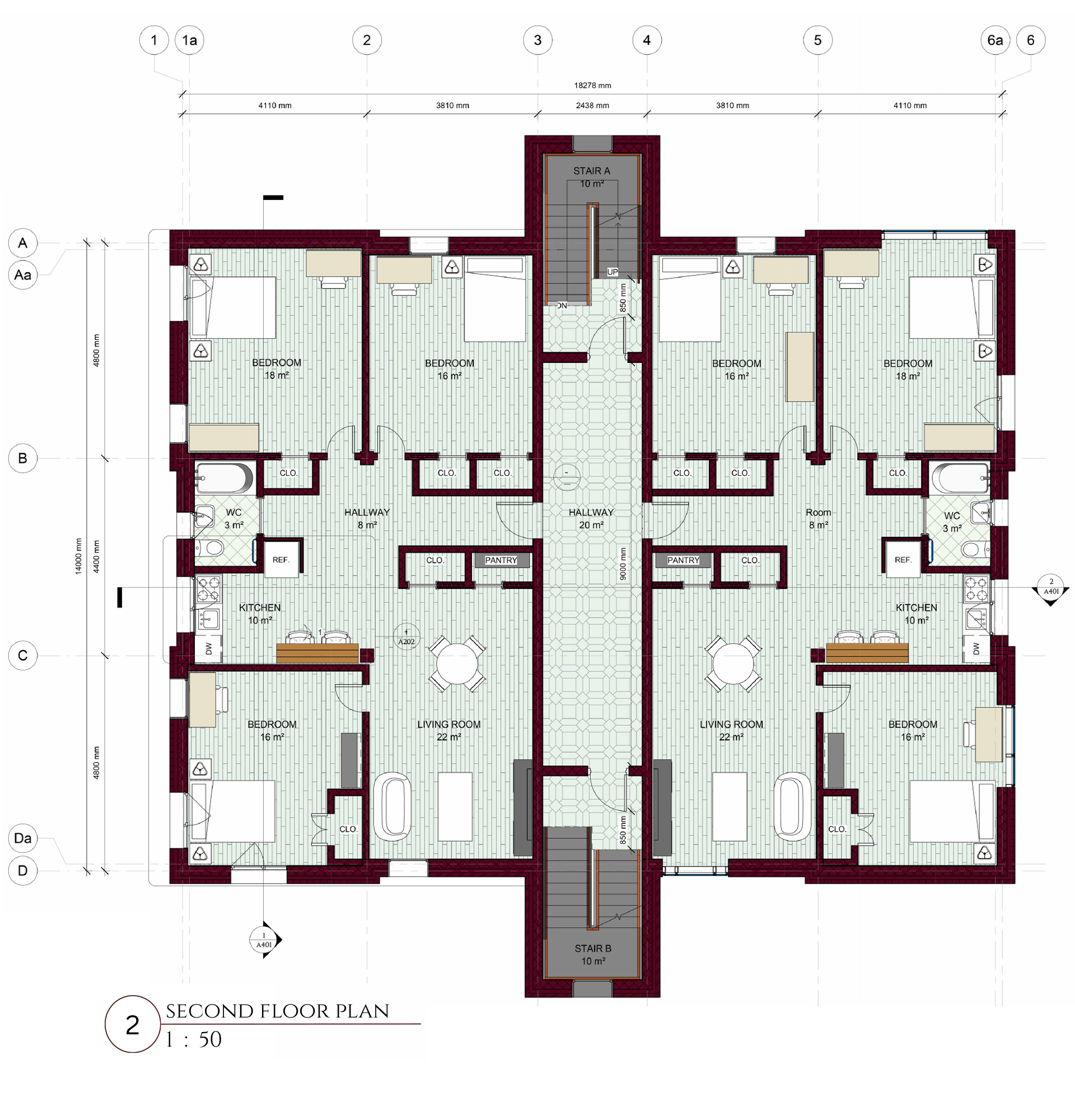
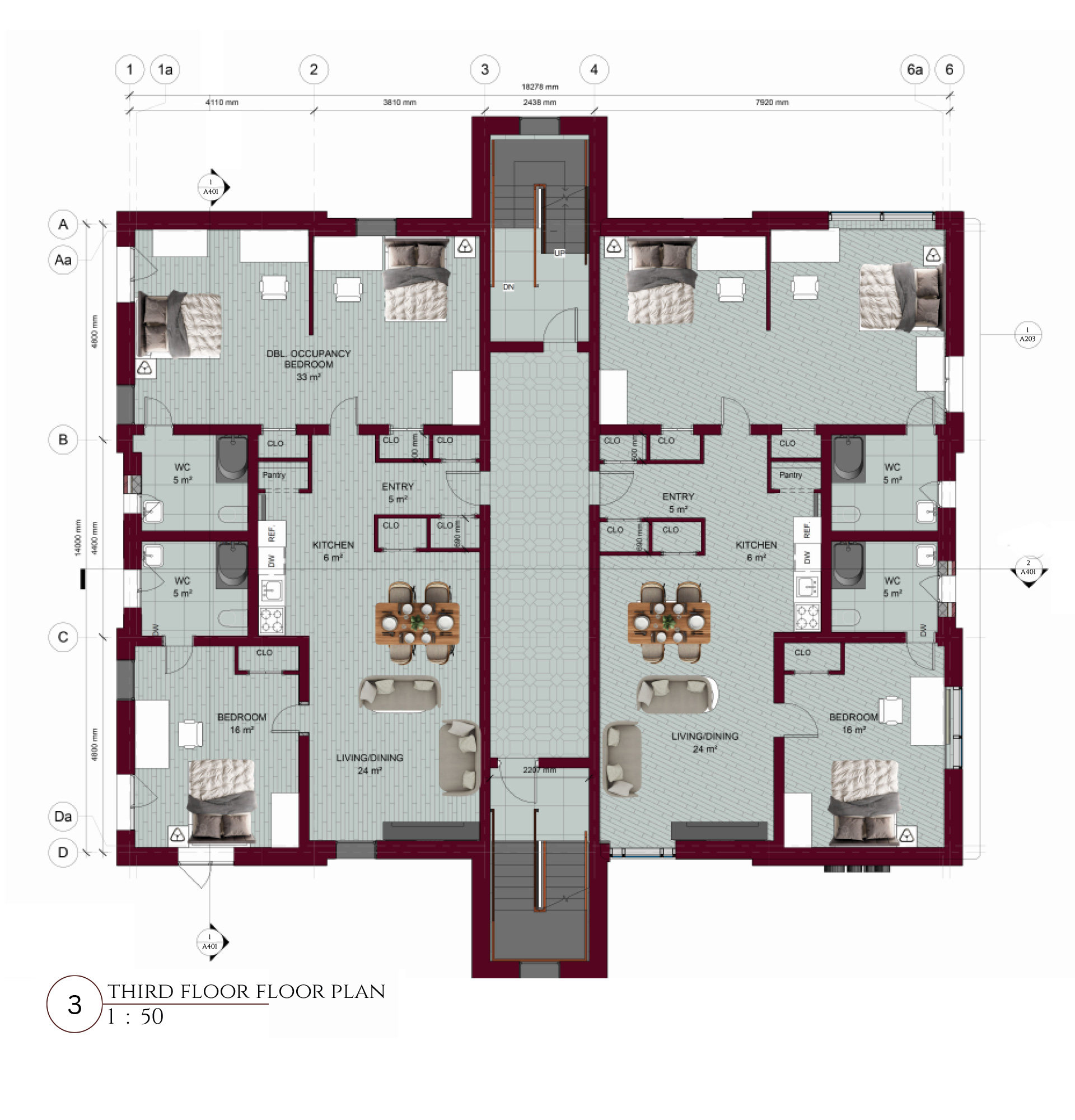
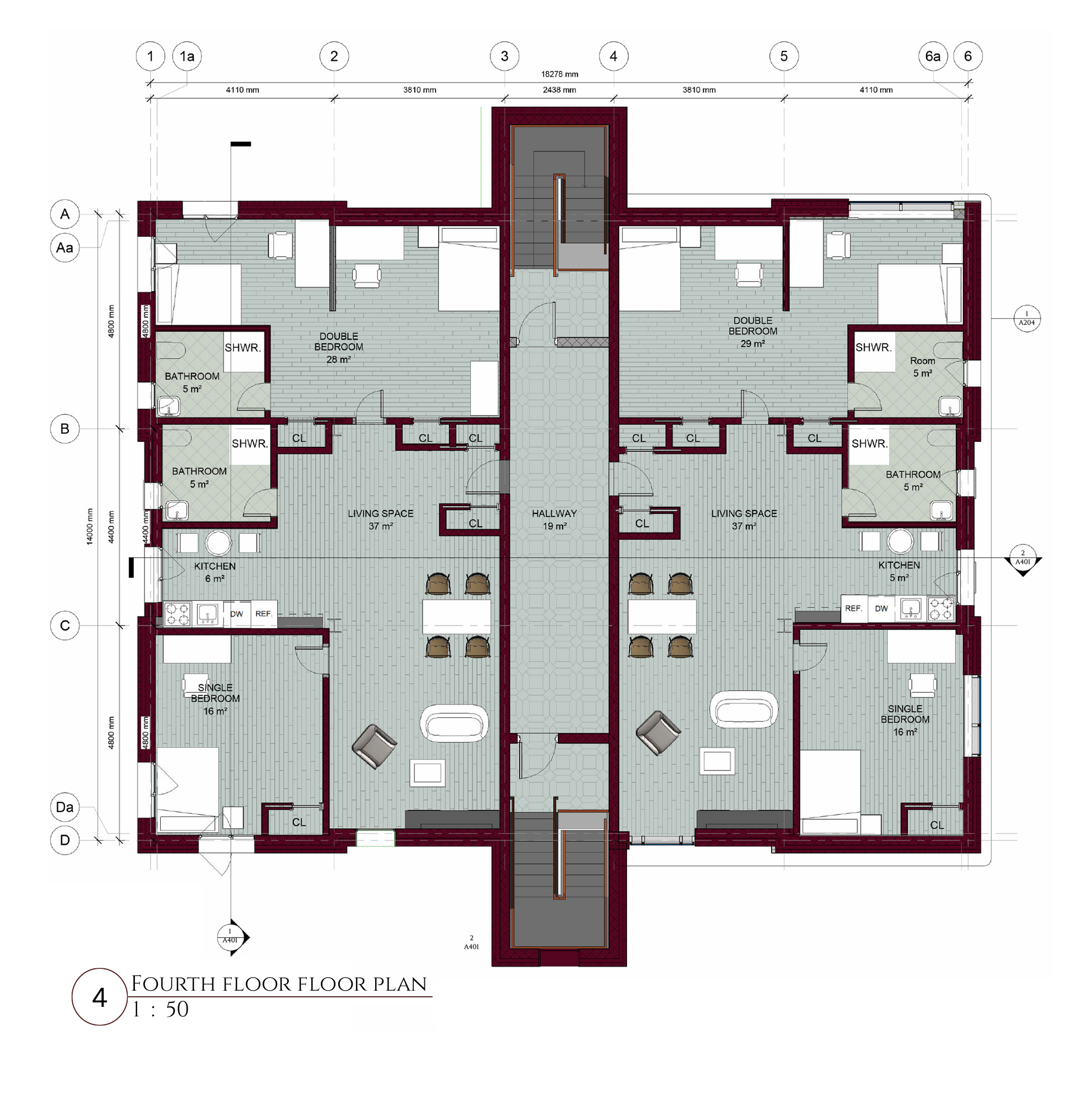
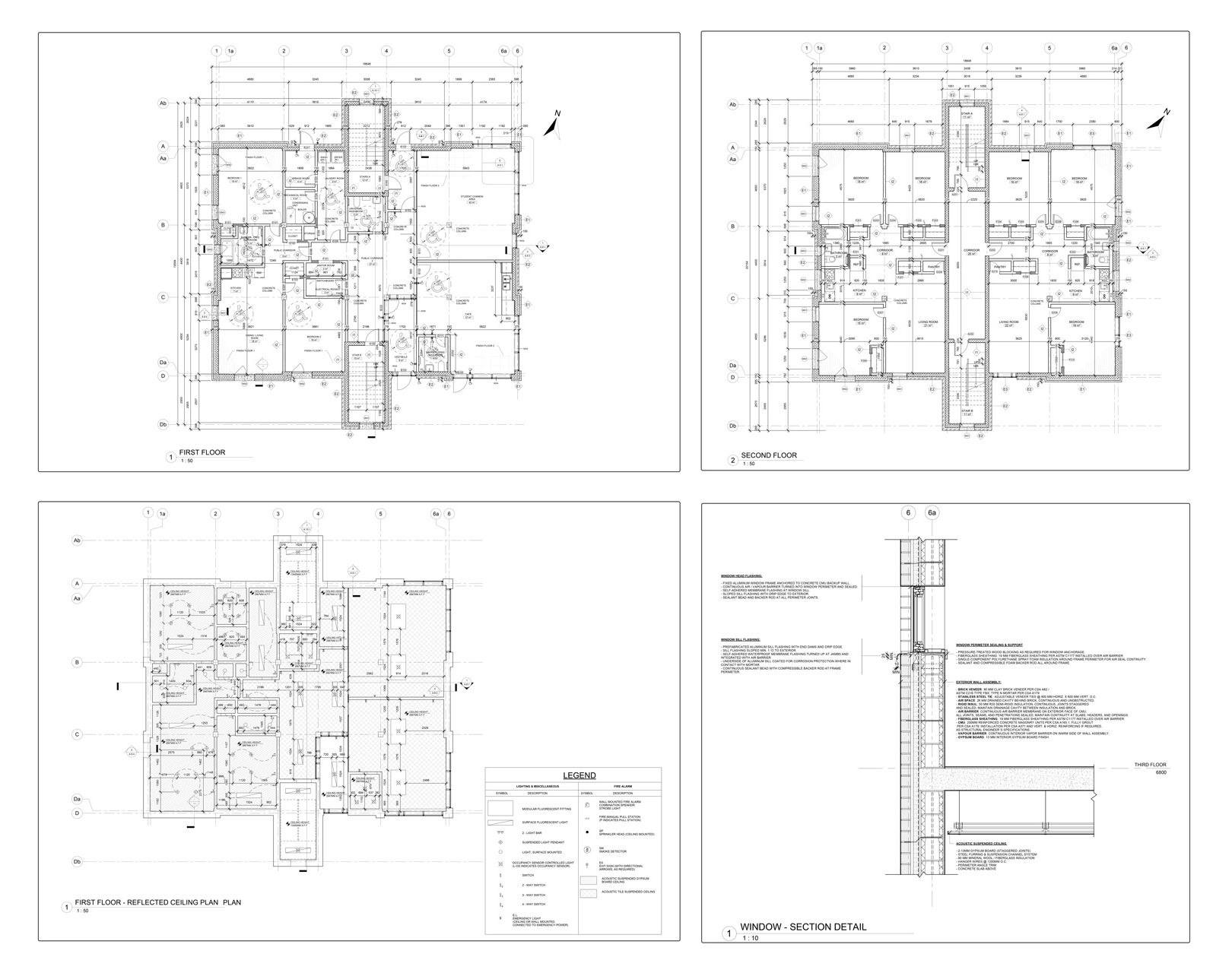
Architectural planning was driven by a detailed interpretation of the Ontario Building Code, with accessibility requirements applied consistently throughout the building. Entrances, corridors, vertical circulation, and shared facilities were designed to support barrier-free movement without spatial segregation. Unit layouts were also planned to accommodate diverse physical abilities over time.
This code-based approach ensures the building remains inclusive and functional throughout its lifecycle. By prioritizing accessibility at the planning level, the project minimizes the need for future retrofits and improves long-term operational efficiency.
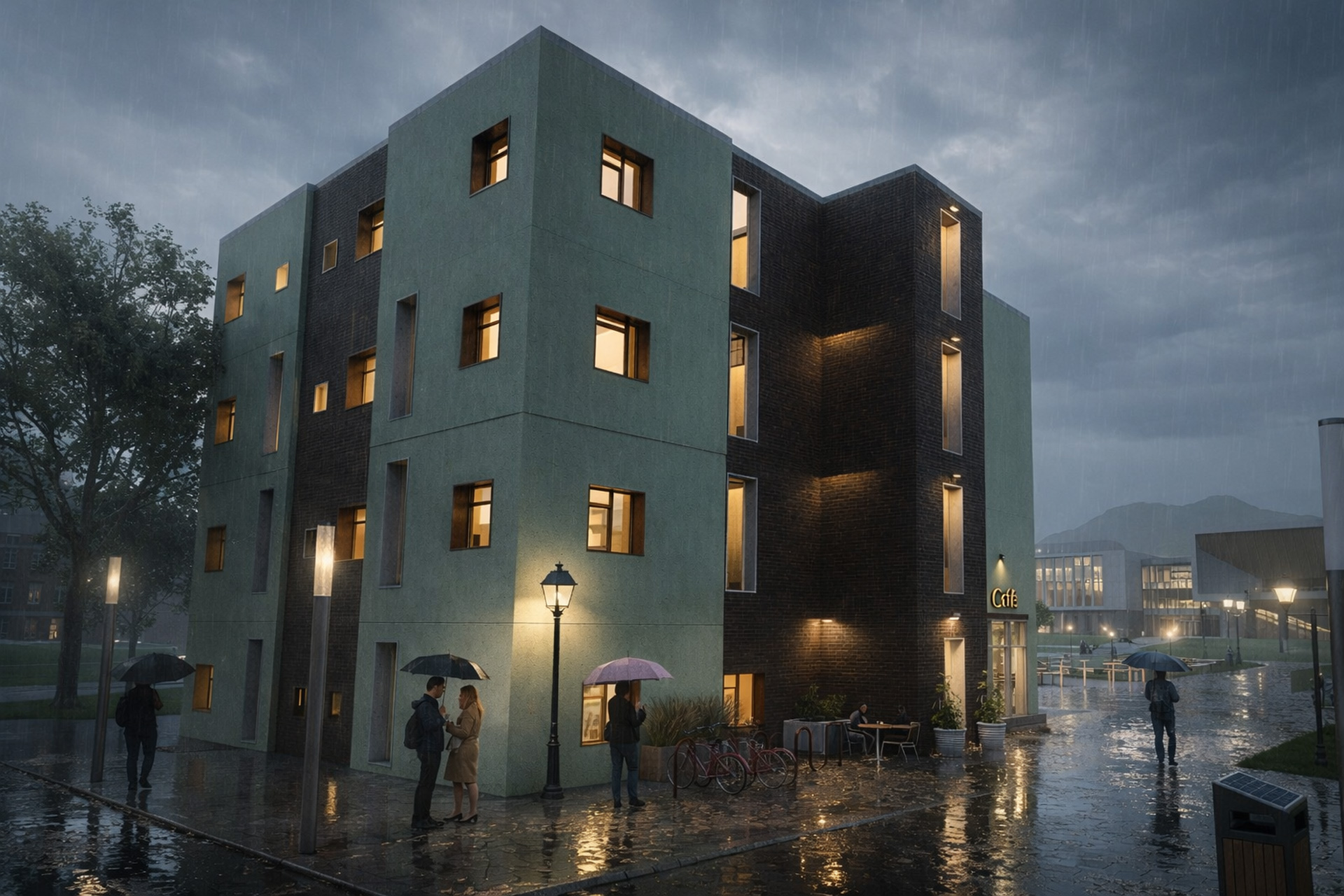
Fire safety planning was developed in accordance with OBC requirements for exit distribution, travel distance, and fire separation. Egress routes were organized to be legible and direct, reducing confusion during emergency situations. Stairwells and exits were strategically positioned to support efficient evacuation.
These safety systems were carefully integrated to maintain spatial clarity and architectural continuity. As a result, life safety requirements strengthen the overall spatial organization rather than limiting design flexibility.
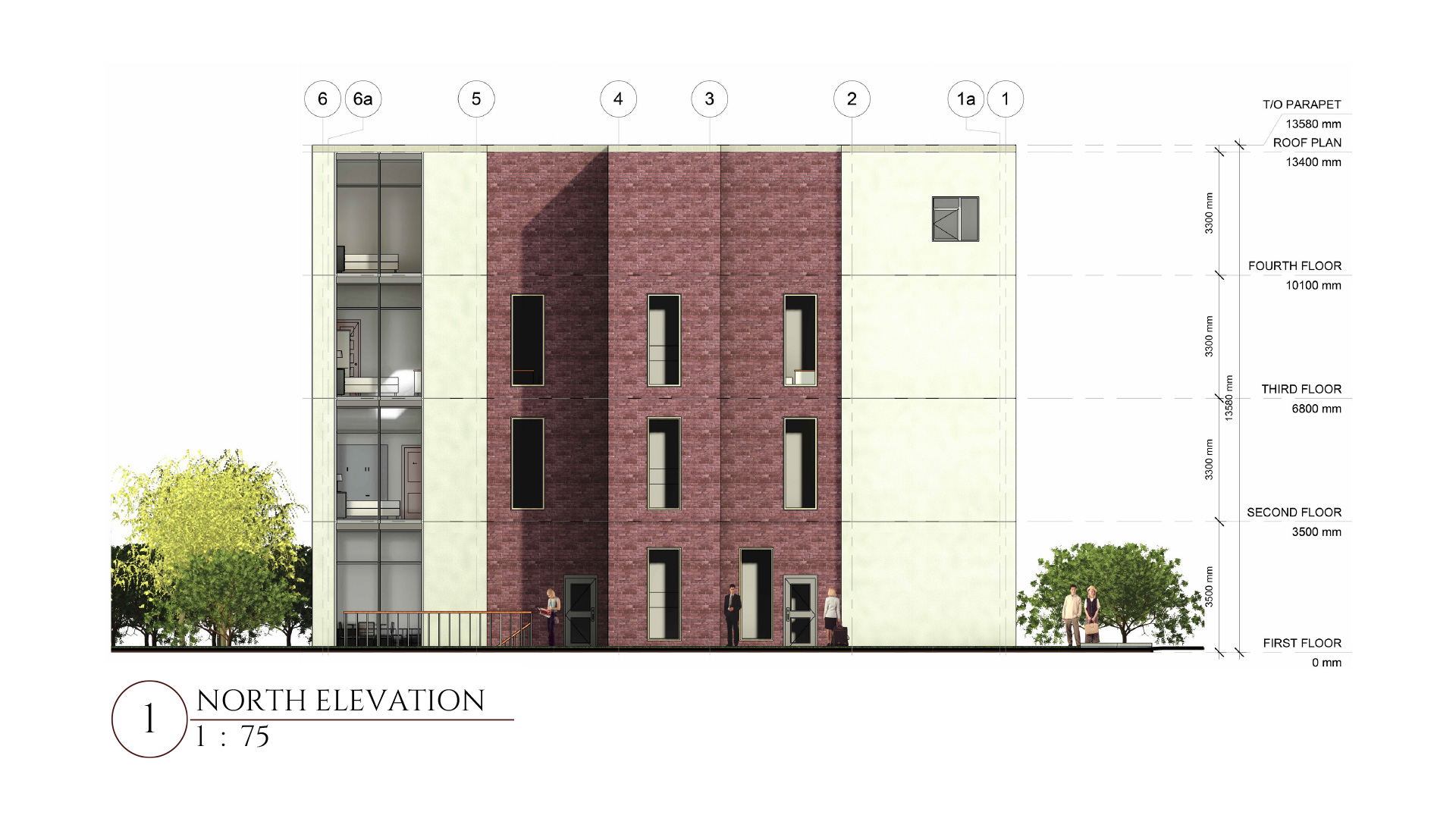
North Elevation
The north elevation responds directly to the site’s sloped condition adjacent to the upper park level and surrounding green space.
An exterior stair connects the park level to the underground parking area, supporting daily circulation for students and staff while also functioning as a secondary means of egress during emergency situations.
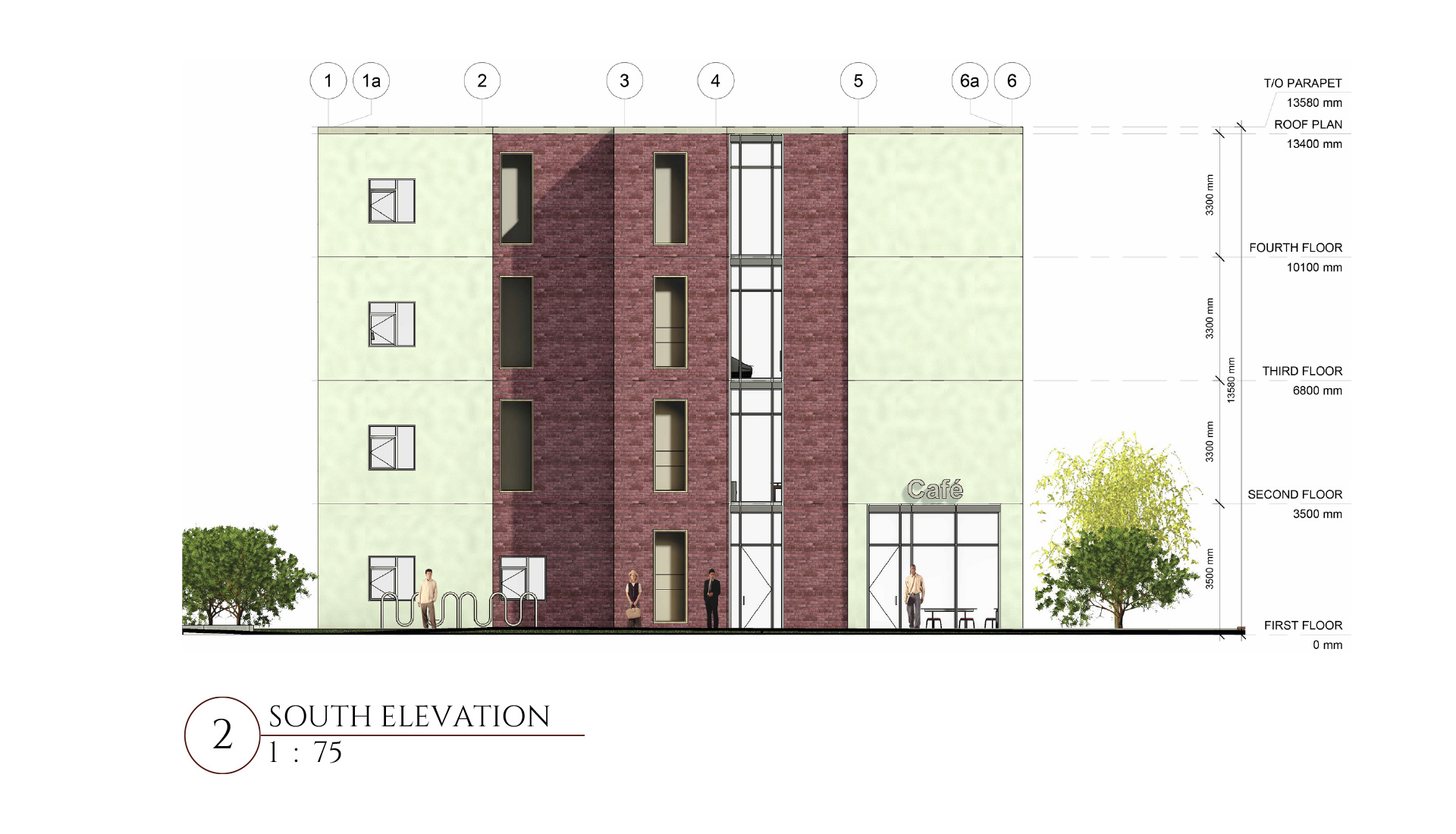
South Elevation
The south elevation serves as the primary public entrance to the residence and connects directly to the first-floor cafeteria and main student circulation zone.
Bicycle parking, transparent glazing, and adjacent exterior gathering areas were incorporated to encourage student interaction and create an active connection between the building and campus environment.
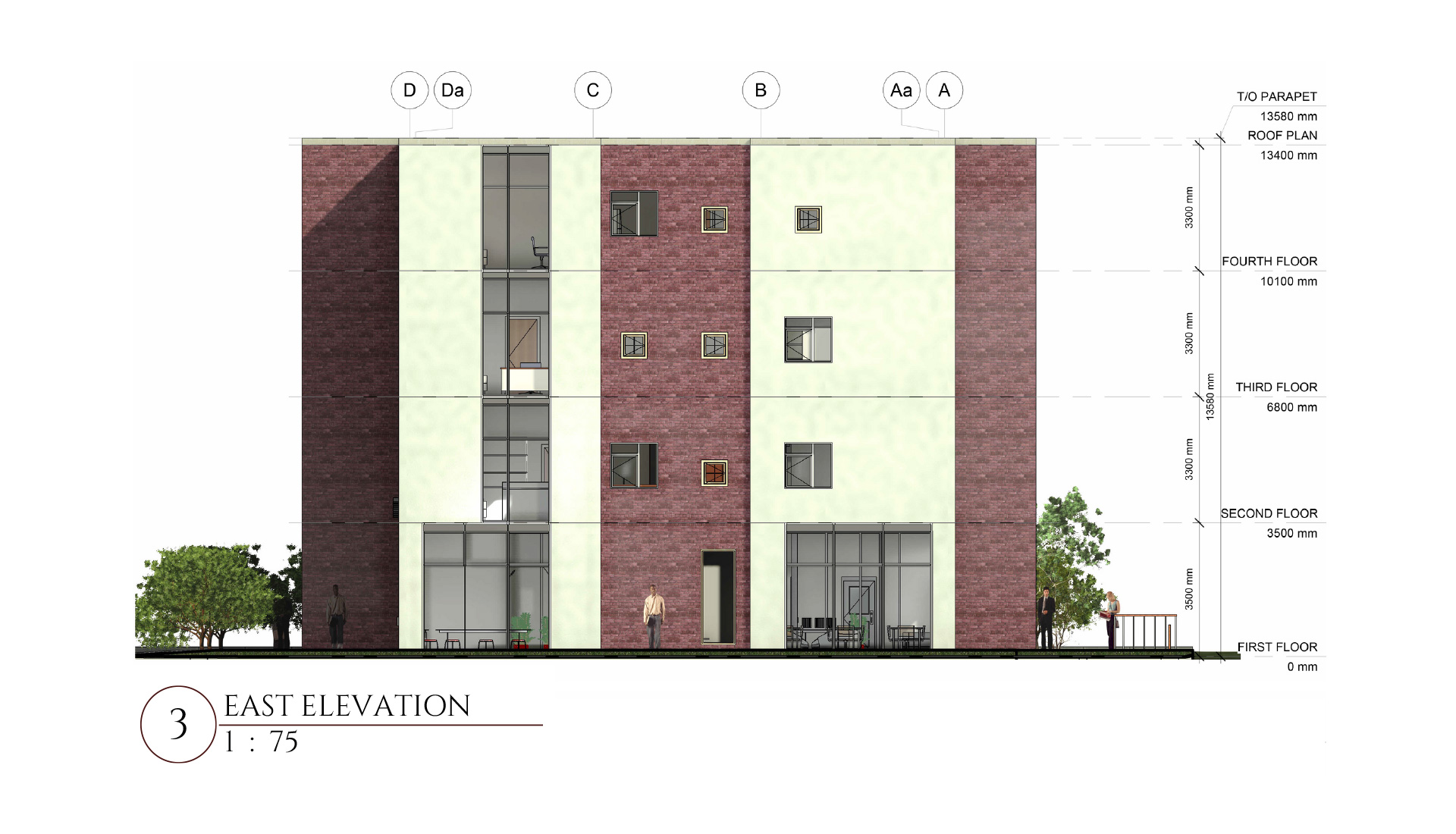
East Elevation
The east elevation was designed around the first-floor student lounge, incorporating larger glazed openings to maximize daylight and exterior visibility.
An outdoor patio above the underground parking structure extends usable communal space during warmer seasons.
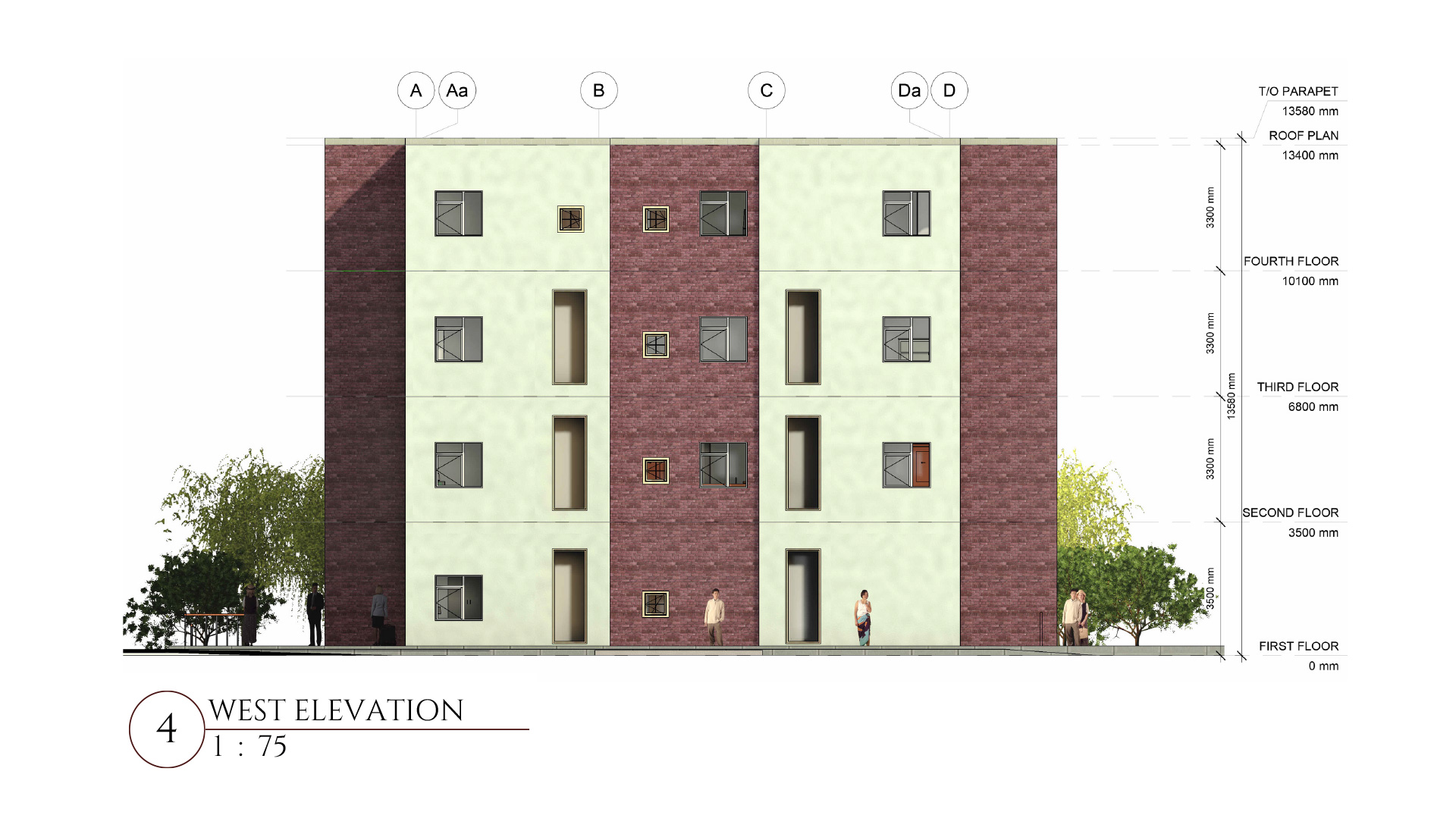
West Elevation
The west elevation primarily accommodates student residence units, resulting in a more controlled and repetitive facade composition.
Window sizes and placements were organized according to the functional requirements of bedrooms and washrooms, balancing daylight access, privacy, and residential comfort.
The building facades were designed to balance functional performance, residential privacy, and campus connectivity while maintaining a clear architectural rhythm throughout the project.
Openings, circulation elements, and communal areas were carefully integrated to improve daylight access, wayfinding, and visual relationships with adjacent outdoor spaces. Exterior design strategies also reinforce long-term usability and support the residence’s role as an inclusive student-oriented living environment.
The building section demonstrates the project’s broader environmental strategy through the integration of sustainable building systems and long-term ecological considerations. A cool roofing system was incorporated to reduce heat absorption and mitigate urban heat island effects, while bird-friendly glazing strategies were applied to minimize risks to migratory bird populations within the urban context.
Environmental performance was further supported through the inclusion of electric vehicle charging stations within the underground parking level and a rainwater collection system designed to repurpose stormwater for non-potable building use. Together, these systems position the residence as an environmentally responsible student housing project that aligns technical performance with sustainable urban living principles.
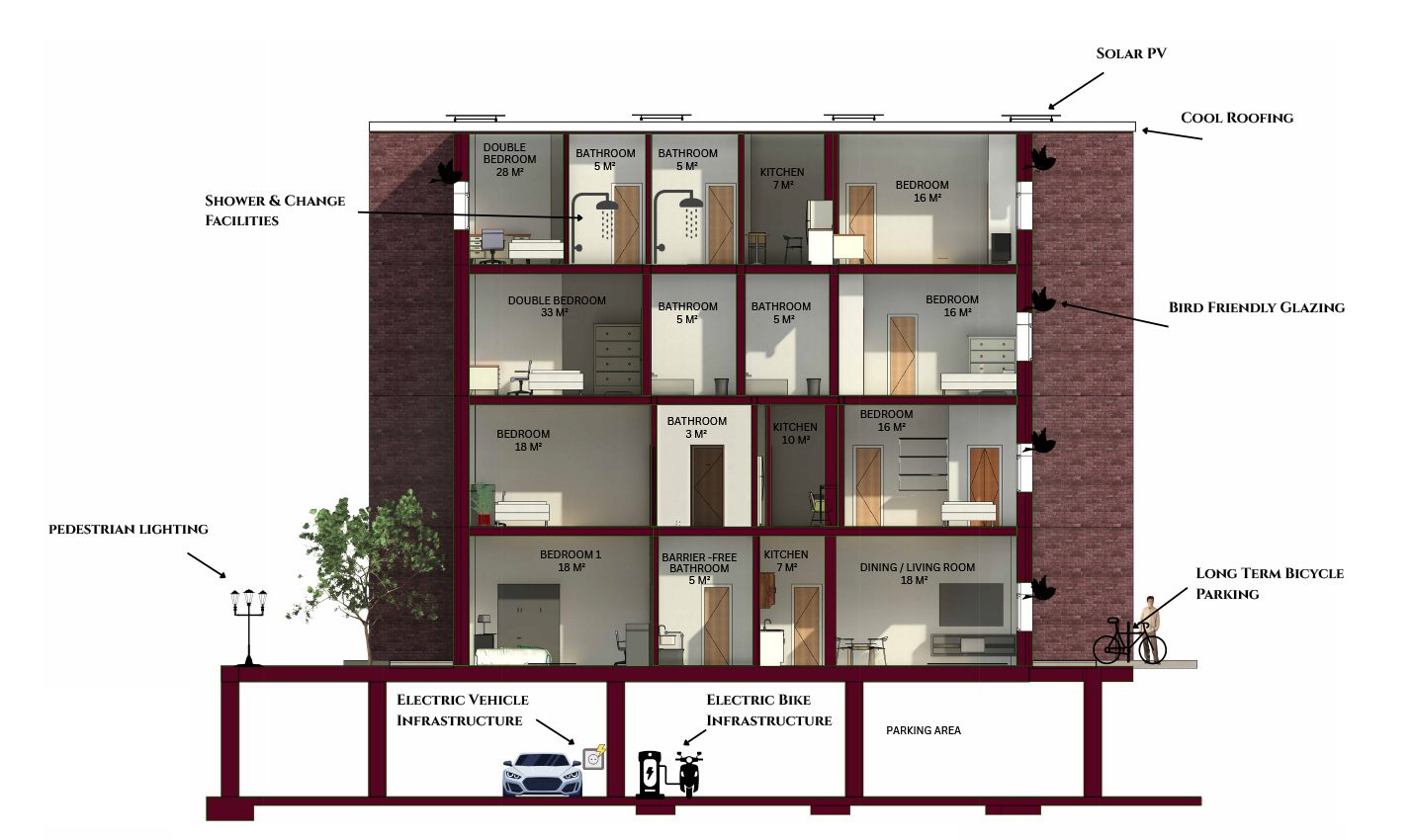
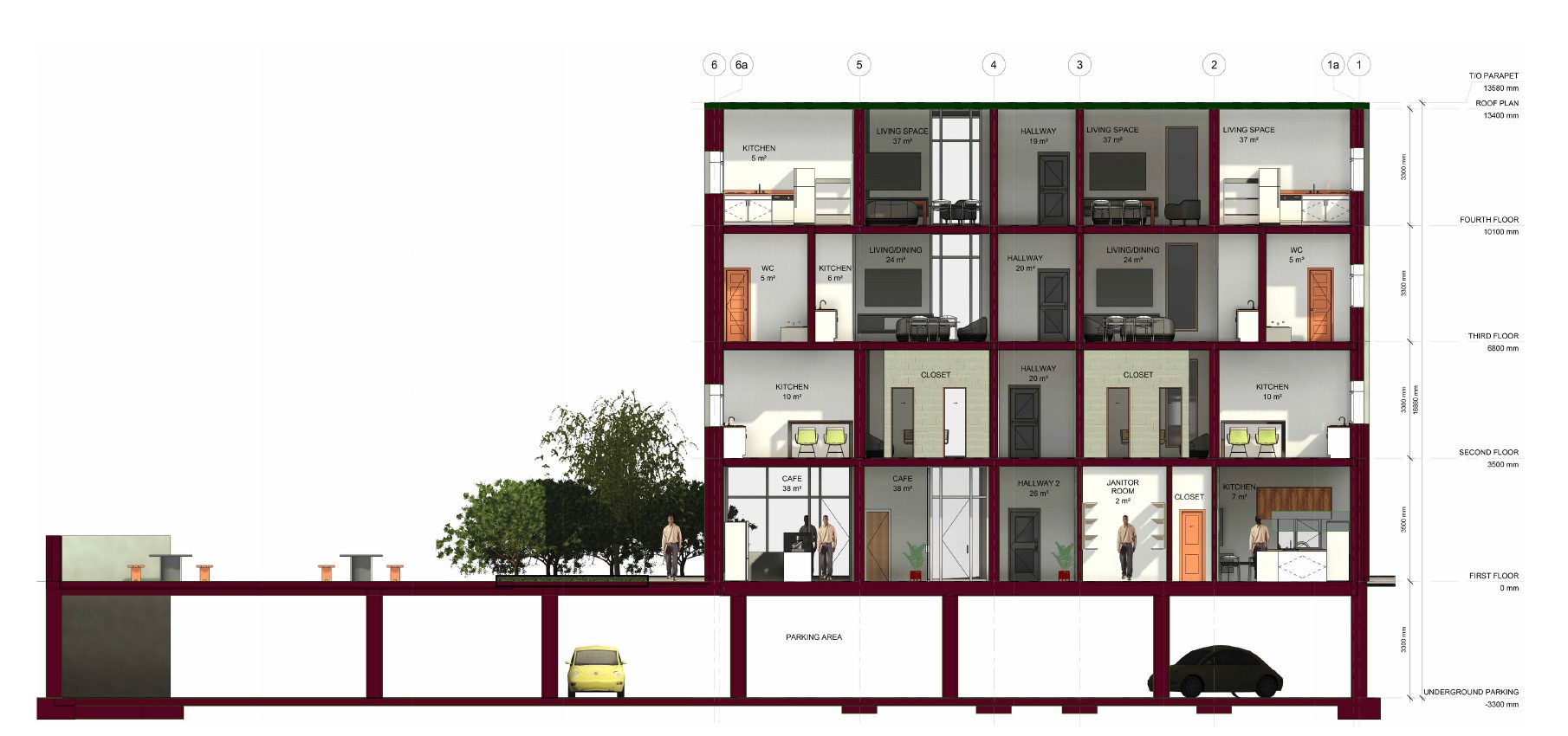
The sectional organization of the residence was carefully planned to support student well-being, productivity, and everyday living efficiency. Shared study areas, lounge spaces, and circulation zones were arranged to encourage both focused academic activity and informal social interaction. Access to natural daylight and visual openness between floors contribute to a healthier and more comfortable living environment for residents.
Rather than treating the residence solely as a housing facility, the project approaches student living as an extension of the educational experience. Spatial relationships were designed to support collaboration, accessibility, mental well-being, and long-term usability, creating an environment that responds directly to the daily needs and routines of student life.
Project Info
This academic project was developed as a conceptual student residence for George Brown College’s Casa Loma Campus, focusing on accessibility, code compliance, and student-oriented living environments.
The project integrates barrier-free planning, natural daylight, outdoor gathering areas, and sustainable design strategies to create a functional and socially connected residential experience. Emphasis was placed on balancing technical requirements with student well-being and everyday usability.
Academic Project
Completion: November, 2025
Project Type: Student Institutional & Residential Design
Architects: Jin Choi
Project Sustainability
- 65% Sustainable Materials
- 80% Energy Self-Sufficient
- 30% Less Construction Waste
Other Projects
Commercial
Volkswagen Dealership Centre
Vaughan, Canada
Sustainable Building Design
commercial
Young Street Mall
Busan, Korea
Multi-Functional Shopping Centre
Interior
Cafe & Retail Interior
-The Gate Cafe, “Oasis in The City”
-The Gate Cafe, “Journey in The City”
-Miig, Urban Active-wear Retail Shop